
WRITTEN BY
Shun Yamazaki
PR at L for You. Born in Toyama, raised in his mother’s additive-free natural food cafe. Former fashion model. Now sharing the importance of real food from Minami-Aoyama.
Have you ever had those days when sleep just does not feel restorative, or when fatigue settles in for no obvious reason? I know that feeling well. Even with running and cycling as regular habits, I find myself looking for small, consistent ways to support how I feel — from the inside out.
That is what brought me back to matcha with fresh eyes. Not as a trend, but as something worth understanding more carefully.
What Medical Research Is Saying About Matcha
The turning point for me was watching a segment on NHK WORLD-JAPAN’s Medical Frontiers, a program that explores health and medicine from a global perspective. The episode examined matcha not as a culinary trend, but through the lens of scientific research and clinical study.
Three areas were highlighted as particularly active fields of research:
- Sleep quality and mood: L-theanine, an amino acid found in high concentrations in matcha, has been associated with reduced stress response and improved emotional well-being. A randomized controlled trial — conducted in collaboration with Ito En — found that older adults with subjective cognitive decline who consumed two grams of matcha daily for twelve months showed improvements in emotional perception and sleep quality.
- Cognitive function: The combination of EGCG (epigallocatechin gallate) and L-theanine has been studied for its potential to support attention and judgment. Research involving middle-aged and older adults reported measurable improvements in specific cognitive markers after sustained matcha consumption.
- Muscle mass support: This was, honestly, the most unexpected finding for me. Studies have suggested that certain compounds in matcha may be involved in muscle metabolism — potentially offering some support even for those who do not exercise regularly.
None of these are claims of cure or guaranteed outcomes. The research is ongoing, and the effects depend on individual factors and consistency of consumption. What struck me was how seriously the scientific and medical communities are examining something that has been part of Japanese daily life for centuries.
It Is Not Just Matcha — It Is What You Pair It With
This brings me to something I think is often overlooked: the importance of pairings.
The health properties of matcha come from multiple bioactive compounds working together — L-theanine, EGCG, caffeine, chlorophyll, and various vitamins and minerals. Isolating any single component gives you a partial picture at best. The same logic applies to what you combine matcha with when you eat or drink it.
Most commercially available matcha sweets are made with refined white sugar. The rapid blood sugar spike that follows can disrupt the gut microbiome and contribute to glycation at the cellular level. In other words, the way the product is sweetened and formulated may work against the very benefits you are hoping to receive from the matcha itself.
That realization shaped the way I think about what we do at L for You.
Three Matcha Menus at L for You, Designed with Pairings in Mind
All three of our matcha offerings use organic matcha sourced from Kyoto. Every item is gluten-free, vegan, and free from refined white sugar. The formulation of each was guided by the idea of pairing ingredients that work with matcha rather than against it.
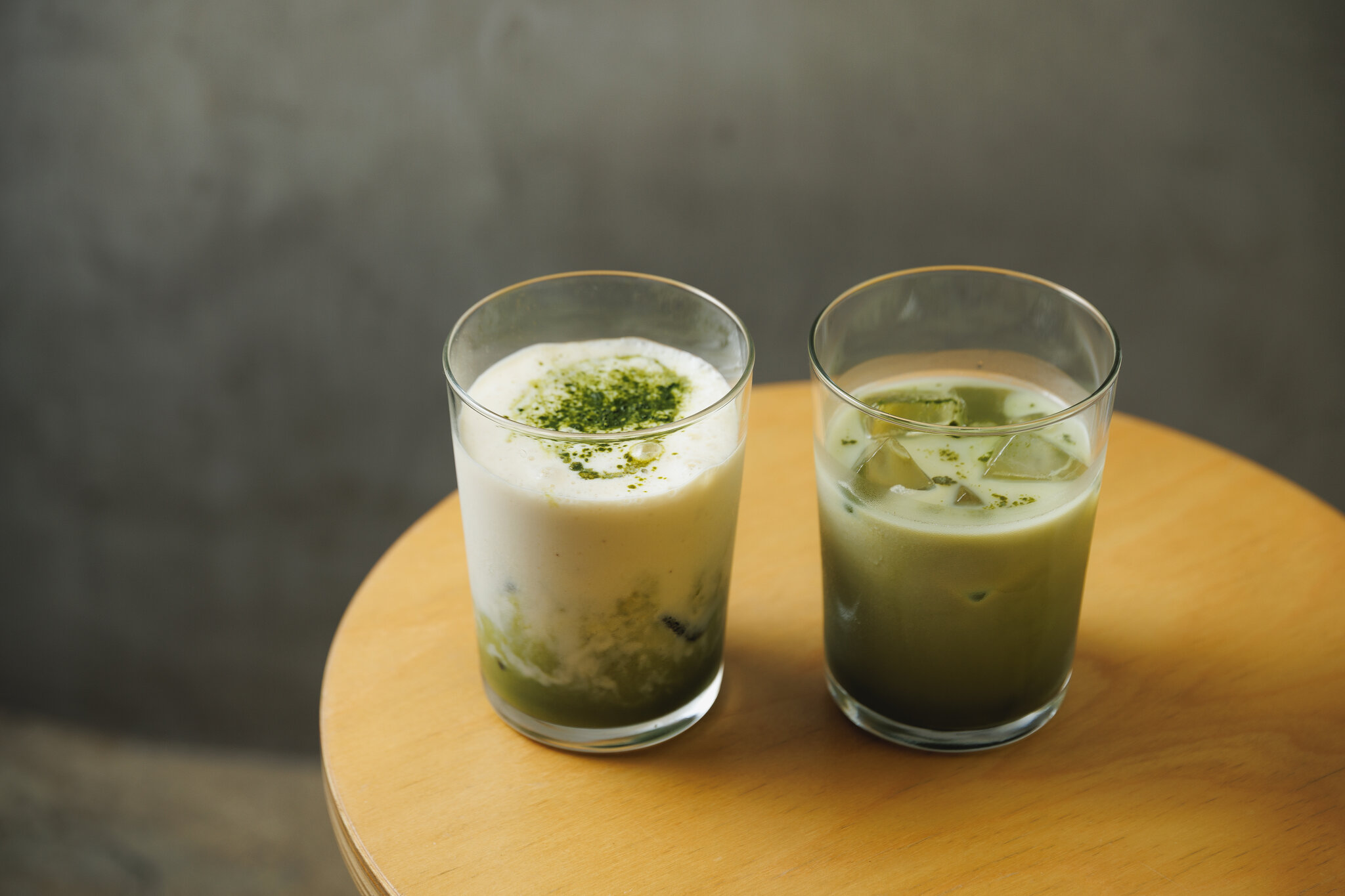
Matcha Latte
Made with plant-based soy milk, our matcha latte keeps the digestive load light while delivering plant protein alongside the theanine and EGCG in the matcha. It is the most approachable of our three options, and for many guests it becomes a daily ritual during their visit to the area.
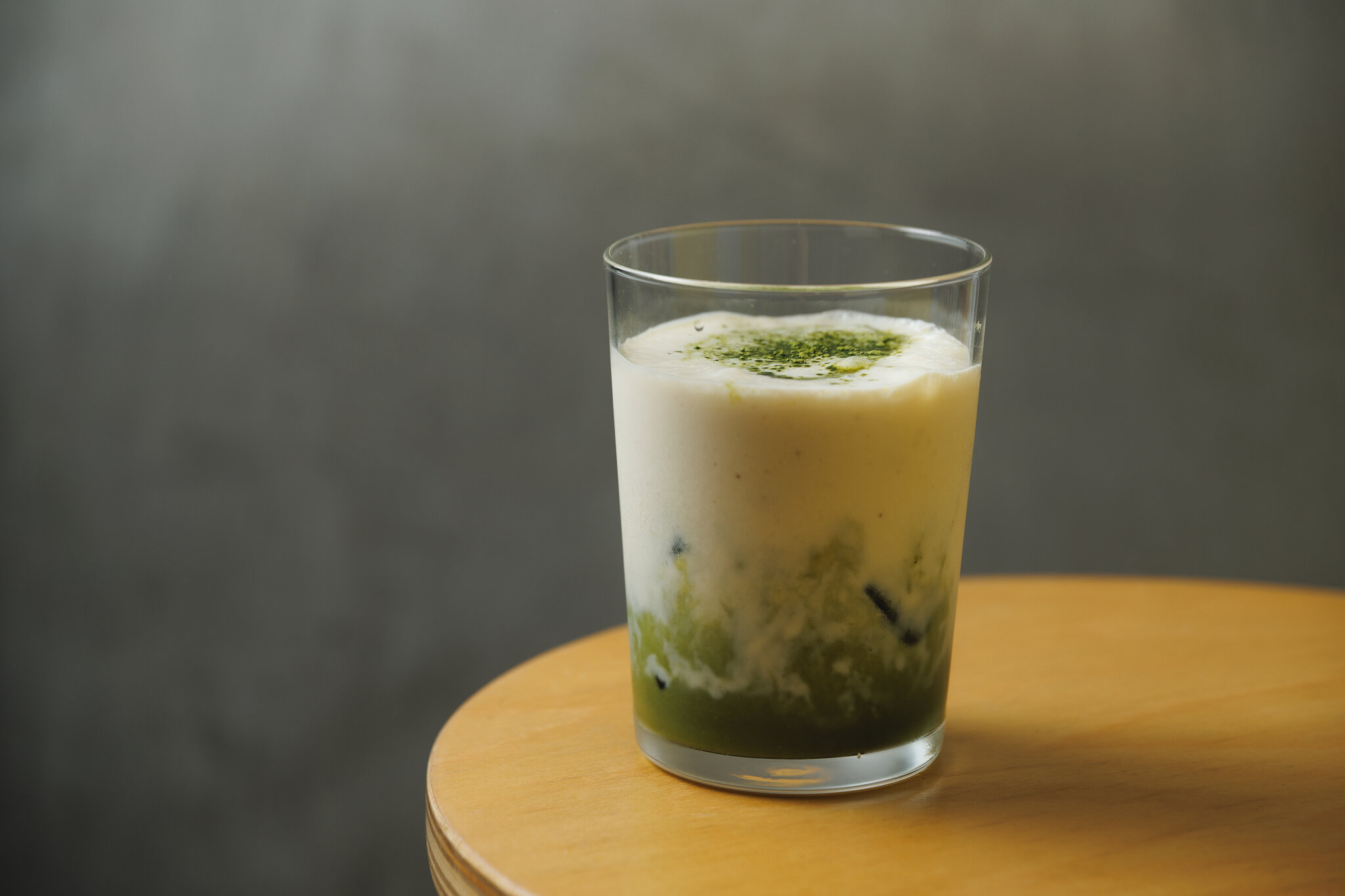
Matcha Banana Shake
Organic banana provides natural sweetness with a low glycemic impact, while agave syrup keeps the added sugar content minimal and stable. Bananas are also a source of magnesium and vitamin B6, both of which play a role in nervous system function and are thought to complement the calming properties of matcha’s theanine. The result is a shake that is genuinely sweet and satisfying without the blood sugar spike.
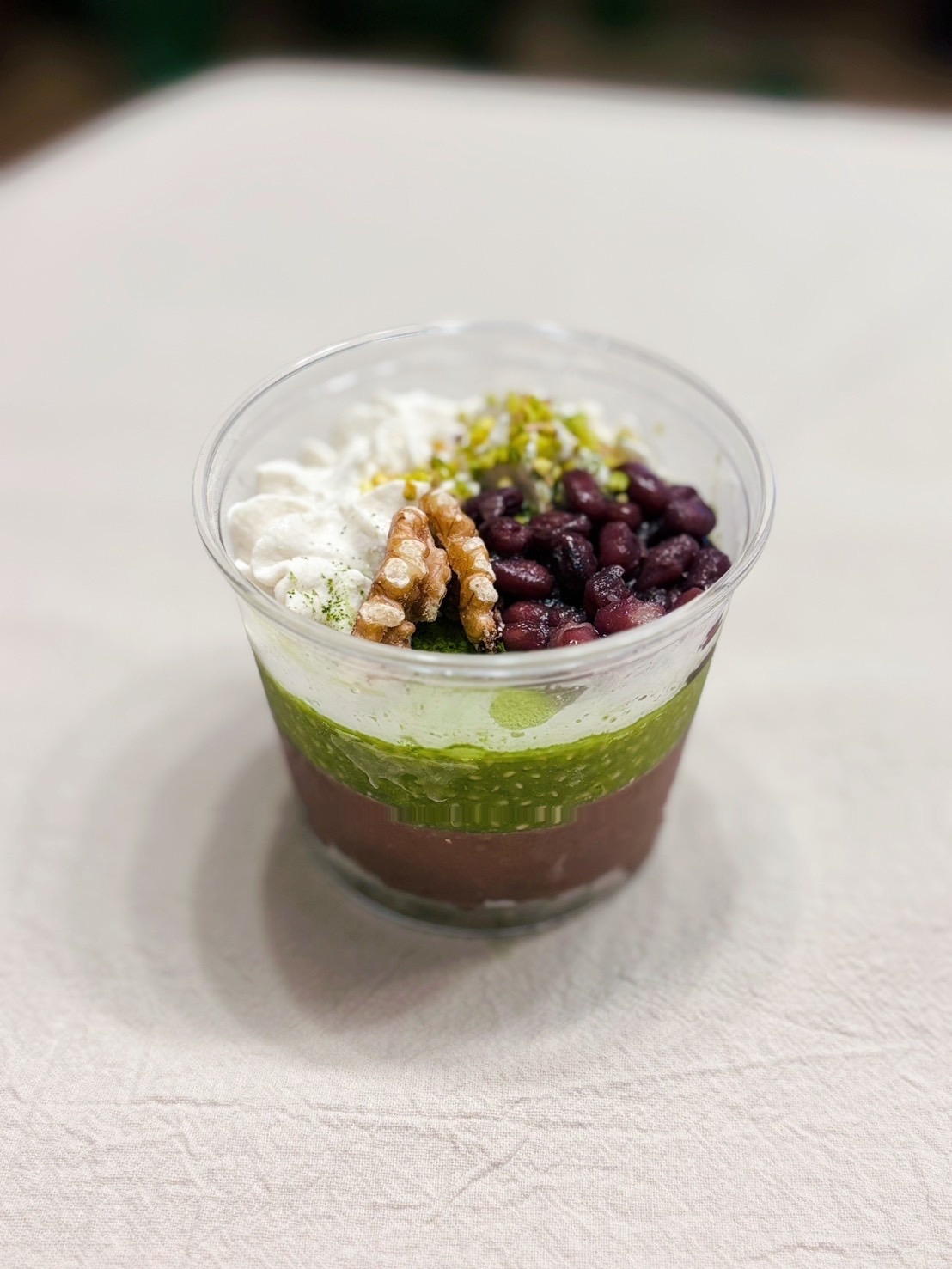
Matcha Protein Raw Sweets
This is the most intentional pairing of the three. A base of nuts, hemp protein, and chia seeds provides quality fat and protein — both of which slow glucose absorption and help sustain stable energy levels. Combined with matcha, you get EGCG and theanine delivered in a food matrix designed to keep blood sugar steady. It works equally well as a snack or a light meal, and it holds its own as a dessert, too.
You can explore our full selection on the menu page, and learn more about our approach to organic Kyoto matcha on our matcha feature page.
What Comes Next
The Medical Frontiers segment also touched on matcha preparations like an emerald smoothie and matcha balls — both of which sparked ideas I have been sitting with. What would those look like, expressed through what L for You stands for?
I have been sharing these ideas with our development and pastry team, and we are slowly working toward giving them shape. I look forward to sharing what we come up with.
A Tradition Worth Revisiting
Matcha has been a part of Japanese culture since the Muromachi period — centuries of refinement embedded in a single bowl of deep green. The fact that contemporary science is finding reasons to take it seriously is, to me, a remarkable convergence of tradition and modernity.
At L for You, we continue to explore what meaningful food experiences can look like — grounded in nutritional thinking, attentive to what the body actually needs, and expressed in a space where we hope each visit feels considered. If you are in the Omotesando or Aoyama area, we would love to have you stop by.
L for You AOYAMA
Ikekami Building 1F, 3-9-3 Minami Aoyama, Minato-ku, Tokyo
6-minute walk from Omotesando Station, Exit A4
Hours: Mon–Sat 11:00–19:30 / Sun 11:00–17:00