
When you look for snacks without egg at a supermarket or convenience store in Japan, do you find yourself unsure where to look in the small print on the back? Here is where egg is written, how it is written, and which sweets follow different labeling rules, in order.
In short: in Japan, whether a packaged snack contains egg is shown in brackets in the ingredient list as 「(卵を含む)」 (contains egg), or at the end as 「(一部に卵を含む)」 (contains egg in part). Egg can also be written as 卵白 (egg white), 卵黄 (egg yolk), 鶏卵 (hen’s egg) or エッグ (egg), and sweets sold loose or over the counter may have no label.
- In Japan, packaged snacks must show egg if it is used. It is written in brackets right after an ingredient, or together at the end of the ingredient list.
- Egg can also be written with other words such as 玉子, たまご, エッグ or 鶏卵, or as ingredients taken from egg, such as 卵白 (egg white) and 卵黄 (egg yolk).
- Whether a note such as “products containing egg are made in the same factory” appears differs by product.
- Sweets sold without a container or package (sold loose by weight, sold face to face at the counter, and so on) and desserts when eating out are not covered by the mandatory allergen labeling. Ask the shop staff.
Egg (卵) Is Written in Brackets and at the End of the Ingredient List
In Japan, packaged sweets at supermarkets and convenience stores must show egg if it is used. If you know where it appears in the ingredient list (原材料名) on the back, you can check it quickly at the shelf.
| Example | Where to look | |
|---|---|---|
| Ingredient by ingredient | 「…、マーガリン、卵白(卵を含む)、…」 (…, margarine, egg white (contains egg), …) | In brackets right after the ingredient |
| All together | 「…(一部に卵・乳成分・小麦を含む)」 (contains egg, milk ingredients and wheat in part) | At the very end of the ingredient list |
| Cautionary note | 「本品製造工場では卵を含む製品を生産しています」 (products containing egg are made in the factory that makes this product) | Outside the label box. Whether it appears, and how it is worded, differs by product |
In principle, allergens are written ingredient by ingredient; they can also be listed together at the end. Which way is used differs by product. The examples are for explanation only and are not the label of any particular product.
In Japan, some items are mandatory allergens (such as egg, milk, wheat and walnuts) and others are recommended to be labeled (such as almonds and soy). The items can be reviewed, so please check the latest list on the Consumer Affairs Agency’s food allergy labeling page (Japanese, opens in a new tab).
Look for Other Ways of Writing Egg, Too
Besides the character 卵, the ingredient list can show egg under other words, or under the names of ingredients taken from egg. In some cases the bracketed 「(卵を含む)」 is left out, so knowing the names makes egg easier to spot.
| Examples | How to read it | |
|---|---|---|
| Other words for egg | 玉子・たまご・タマゴ (tamago), エッグ (eggu), 鶏卵 (hen’s egg), あひる卵 (duck egg), うずら卵 (quail egg) | These clearly mean egg, so 「(卵を含む)」 may be left out when allergens are written ingredient by ingredient |
| Names of dishes made with egg | 厚焼玉子 (thick rolled omelet), ハムエッグ (ham and eggs), etc. | The name shows it is egg, so 「(卵を含む)」 may be left out |
| Ingredients taken from egg | 卵白 (egg white), 卵黄 (egg yolk) | Brackets are added, as in 「卵白(卵を含む)」 (egg white (contains egg)) |
Examples based on the Consumer Affairs Agency’s Food Labeling Standards (labeling of foods containing allergens). These are not all the ways it can be written. When allergens are listed together at the end, 卵 (egg) is included in that summary.
Sweets Sold Loose or Over the Counter May Have No Label
In Japan, sweets sold without a container or package (sold loose by weight, sold face to face at the counter, and so on) and desserts served in cafes are not covered by the mandatory allergen labeling. What is labeled depends on how it is sold, so if you are concerned, please check with the shop staff.
| Egg labeling | How to check | |
|---|---|---|
| Packaged sweets (supermarkets, convenience stores, etc.) | Must be labeled if egg is used | Look at the ingredient list, the allergens and any note outside the label box |
| Foods sold without a container or package (sold loose by weight, sold face to face at the counter, etc.) | Not covered by the mandatory allergen labeling | What is labeled depends on how it is sold, so ask the shop staff |
| Desserts at cafes and restaurants | Not covered by the mandatory allergen labeling (eating out) | Tell the staff and ask before you order |
| Sweets bought online | The package that arrives is labeled. How it is shown on the product page differs by shop | Check both the product page and the label on the package that arrives |
General categories under Japan’s Food Labeling Standards (Consumer Affairs Agency).
How to read the slash (/) and the order of the ingredient list is explained in Additive-Free (無添加) Snacks at Japanese Convenience Stores. To bake without egg at home, see Eggless Cookies.
L for You’s Baked Goods Are Made Without Eggs
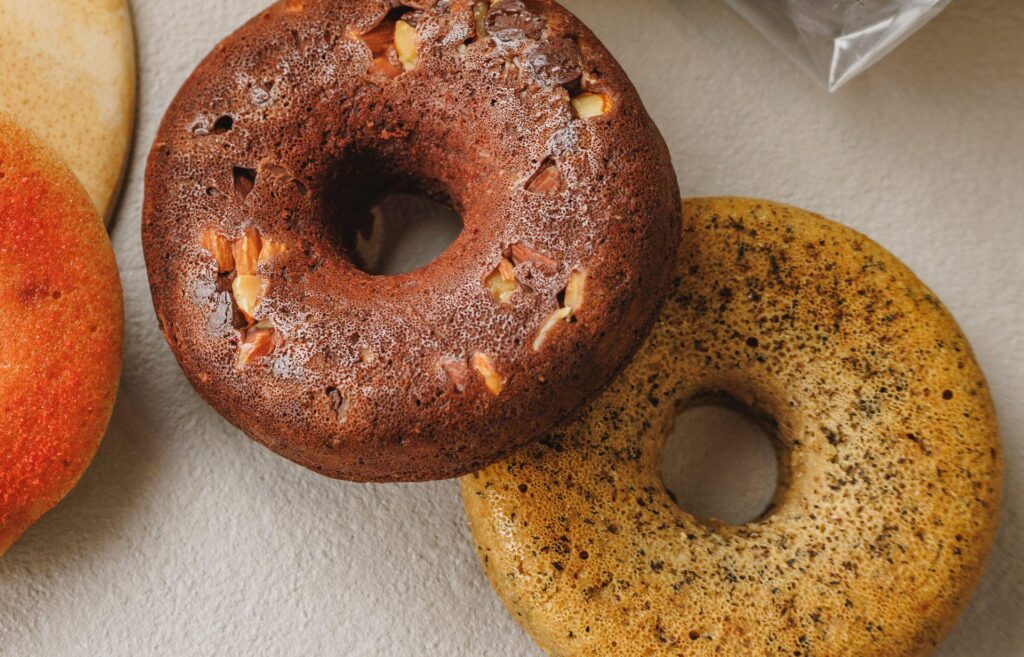
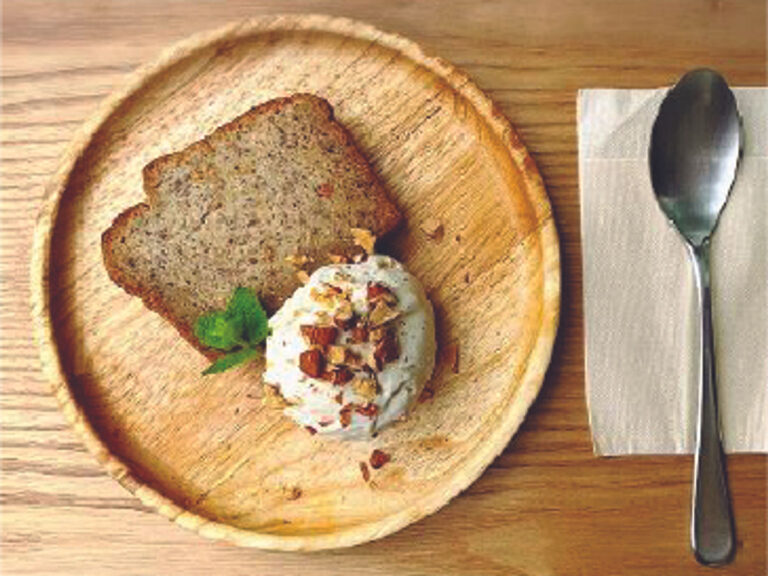
All L for You baked goods are vegan and made without wheat flour, eggs or dairy. Some flavors use walnuts and almonds, and every flavor uses soy milk (soy). The table below shows the differences by flavor.
| Nuts | Soy | |
|---|---|---|
| Cookies (chocolate sandwich beet) | Almonds (almond flour) | Soy milk |
| Cookies (oatmeal) | Walnuts, almonds (almond flour) | Soy milk |
| Donuts (Earl Grey with raisin & mulberry / chocolate chip & almond / strawberry) | Almonds (almond flour) | Soy milk |
| Pound cake (dried fig & walnut cocoa) | Walnuts, almonds (almond flour) | Soy milk |
| Pound cake (chlorella & azuki bean) | Almonds (almond flour) | Soy milk |
| Pound cake (banana / chocolate chip banana) | Not used as an ingredient | Soy milk |
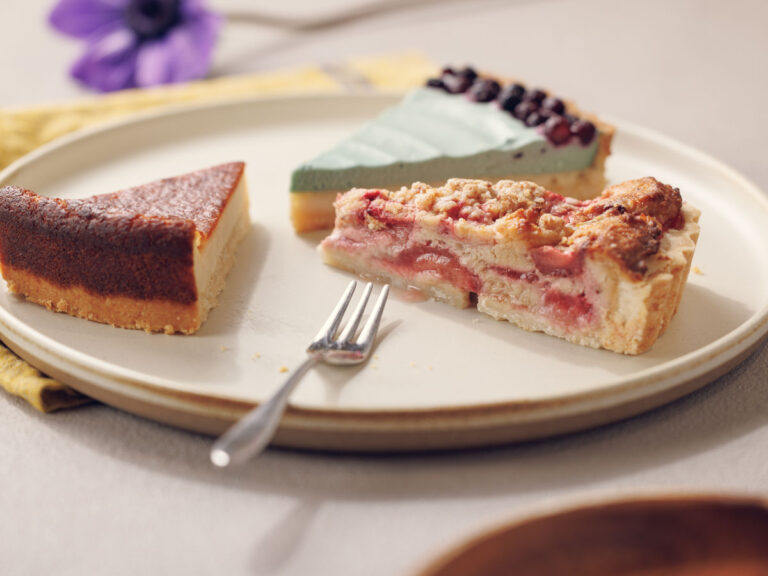
| Apple tart | Almonds (almond flour) | Soy milk |
In Japan, walnuts are a mandatory allergen, and almonds and soy are recommended to be labeled. Every flavor is made without wheat flour, eggs or dairy, but we cannot rule out trace contamination that comes from the raw materials themselves. Based on L for You’s ingredients as of October 31, 2026.

However, we cannot rule out trace contamination that comes from the raw materials themselves — for example, when an ingredient is grown or processed near wheat, eggs, dairy or nuts. If you have questions about a specific ingredient, please contact us and we will answer.
Please check the ingredients yourself and decide which to choose. Our baked goods are available in our online store (opens in a new tab; ships within Japan only) and at our shop in Minami-Aoyama.
Frequently Asked Questions
Visit Us
Cookies, donuts and pound cakes are always available at our shop in Minami-Aoyama. If you have questions about ingredients or allergens, please ask our staff before you buy.
| L for You AOYAMA | |
|---|---|
| Address | 1F Ikegami Bldg, 3-9-3 Minami-Aoyama, Minato-ku, Tokyo |
| Access | 6-minute walk from Omotesando Station, Exit A4 |
| Hours | Mon–Thu 11:00–20:00 / Fri 11:00–21:00 / Sat 9:30–21:00 / Sun 9:30–18:00 |
| Phone | +81-3-6459-2504 |
See how to find us, or browse the menu if you’d like to stay for a meal.