Even when you are looking for sweets made without dairy, do names such as 乳化剤 (emulsifier) or 乳酸菌 (lactic acid bacteria) leave you unsure? Here is where milk is written, the names it appears under, and how to read “no dairy” on the front of the package, in order.
In short: in Japan, whether a packaged snack contains milk is shown in the ingredient list as 「(乳成分を含む)」 (contains milk ingredients), or at the end as 「(一部に乳成分を含む)」 (contains milk ingredients in part). Milk also appears as butter, cheese or lactose, while emulsifiers and lactic acid bacteria are not necessarily milk, even with 乳 in the name.
- In Japan, packaged snacks must show milk if it is used. On the label it is often written as 乳成分 (milk ingredients).
- Ingredients whose names clearly mean milk, such as ミルク (milk), バター (butter), チーズ (cheese) and 乳糖 (lactose), may appear without the bracketed 「(乳成分を含む)」.
- 乳化剤 (emulsifier), 乳酸カルシウム (calcium lactate) and 乳酸菌 (lactic acid bacteria) are not necessarily made from milk, even though their names contain 乳 (milk).
- Soy milk and coconut milk are not “milk” in labeling terms. Soy milk is covered by the soy labeling.
Milk Is Written as 乳成分 (Milk Ingredients), in Brackets and at the End
In Japan, packaged sweets must show milk if it is used. On the label it is often written as 乳成分 (nyū-seibun, milk ingredients) rather than 乳 (milk), and appears in brackets right after an ingredient, or together at the end of the ingredient list (原材料名).
| Example | Where to look | |
|---|---|---|
| Ingredient by ingredient | 「…、チョコレート(乳成分・大豆を含む)、…」 (…, chocolate (contains milk ingredients and soy), …) | In brackets right after the ingredient |
| All together | 「…(一部に乳成分・小麦・大豆を含む)」 (contains milk ingredients, wheat and soy in part) | At the very end of the ingredient list |
| Cautionary note | 「本品製造工場では乳成分を含む製品を生産しています」 (products containing milk ingredients are made in the factory that makes this product) | Outside the label box. Whether it appears, and how it is worded, differs by product |
In principle, allergens are written ingredient by ingredient; they can also be listed together at the end. The examples are for explanation only and are not the label of any particular product.
In Japan, some items are mandatory allergens (such as milk, egg, wheat and walnuts) and others are recommended to be labeled (such as soy and almonds). The items can be reviewed, so please check the latest list on the Consumer Affairs Agency’s food allergy labeling page (Japanese, opens in a new tab).
Names of Dairy Products, and Names With 乳 That Aren’t Always Milk
Ingredients whose names clearly mean milk, such as butter and cheese, may appear without the bracketed 「(乳成分を含む)」. On the other hand, some ingredients such as emulsifiers and lactic acid bacteria have 乳 in their names but are not necessarily made from milk.
| Examples | How to read it | |
|---|---|---|
| Names that clearly mean milk | ミルク (milk), バター (butter), バターオイル (butter oil), チーズ (cheese), アイスクリーム (ice cream) | 「(乳成分を含む)」 may be left out when allergens are written ingredient by ingredient |
| Ingredients taken from milk | 乳糖 (lactose), 乳たんぱく (milk protein), 加糖れん乳 (sweetened condensed milk), 調製粉乳 (prepared milk powder), etc. | Written as ingredients that contain milk |
| Names with 乳 that are not necessarily milk | 乳化剤 (emulsifier), 乳酸カルシウム (calcium lactate), 乳酸菌 (lactic acid bacteria) | You can’t tell by the name alone. Check whether 乳成分 (milk ingredients) appears in the brackets or the summary at the end |
| Plant-based “milks” | 豆乳 (soy milk), ココナッツミルク (coconut milk) | Not “milk” in labeling terms. Soy milk is covered by the soy labeling |
Examples based on the Consumer Affairs Agency’s Food Labeling Standards (labeling of foods containing allergens) and its handbook on allergy labeling for processed foods. These are not all the ways it can be written.
When the name alone doesn’t settle it, check whether 乳成分 (milk ingredients) is included in the summary at the end of the ingredient list.
Check “No Dairy” and “Vegan” Labels on the Back, Too
Words on the front of the package such as 「乳製品不使用」 (no dairy products used), 「ヴィーガン」 (vegan) and 「植物性」 (plant-based) are a reason to pick something up. But what they cover differs by word and by product, so also look at the ingredient list and any note outside the label box on the back.
| What it tells you | What to check on the back | |
|---|---|---|
| 「乳製品不使用」「乳成分不使用」 (no dairy products / no milk ingredients used) | A label by which the maker tells you no dairy products are used | The ingredient list, the allergens and any note outside the label box |
| 「ヴィーガン」 (vegan) | A word for not using animal-derived ingredients. In Japan, a voluntary JAS standard was created in 2022, but whether a label is based on it differs by product | The ingredient list and the allergens |
| 「植物性」「プラントベース」 (plant-based) | A word for ingredients that are mainly plant-based. It may include a small amount of animal-derived ingredients | Whether the ingredient list includes dairy products |
Use the words on the front as a reason to read the label on the back.
The difference between vegan and plant-based is explained in Vegan Sweets in Tokyo: What “Vegan” Means on a Japanese Label, and how to make whipped cream at home without dairy is in How to Make Vegan Whipped Cream.
L for You’s Baked Goods Are Made Without Dairy
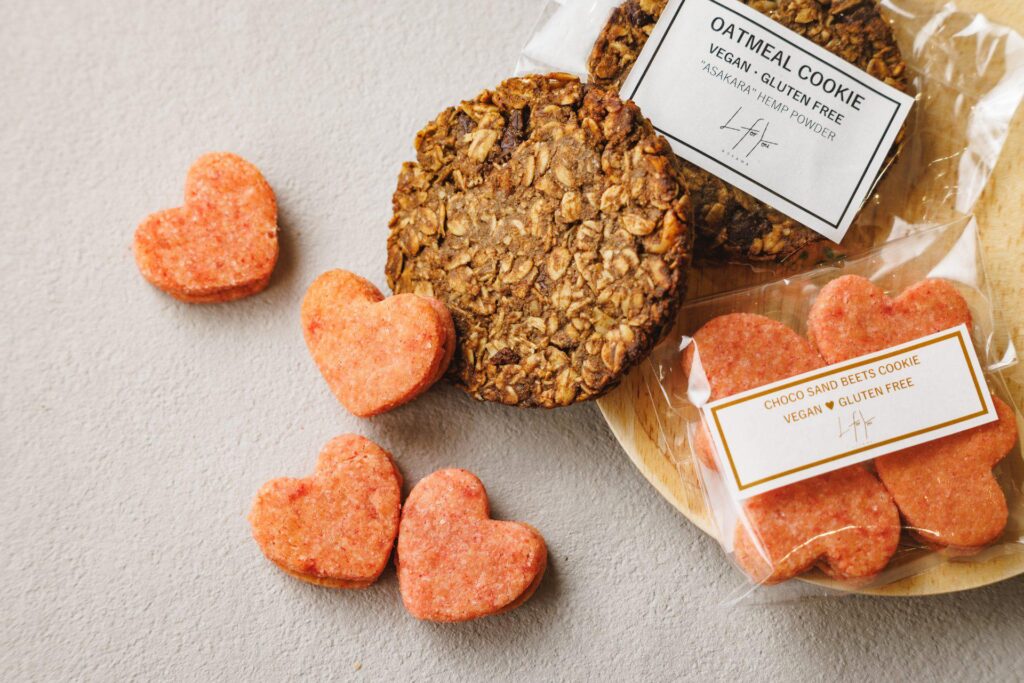
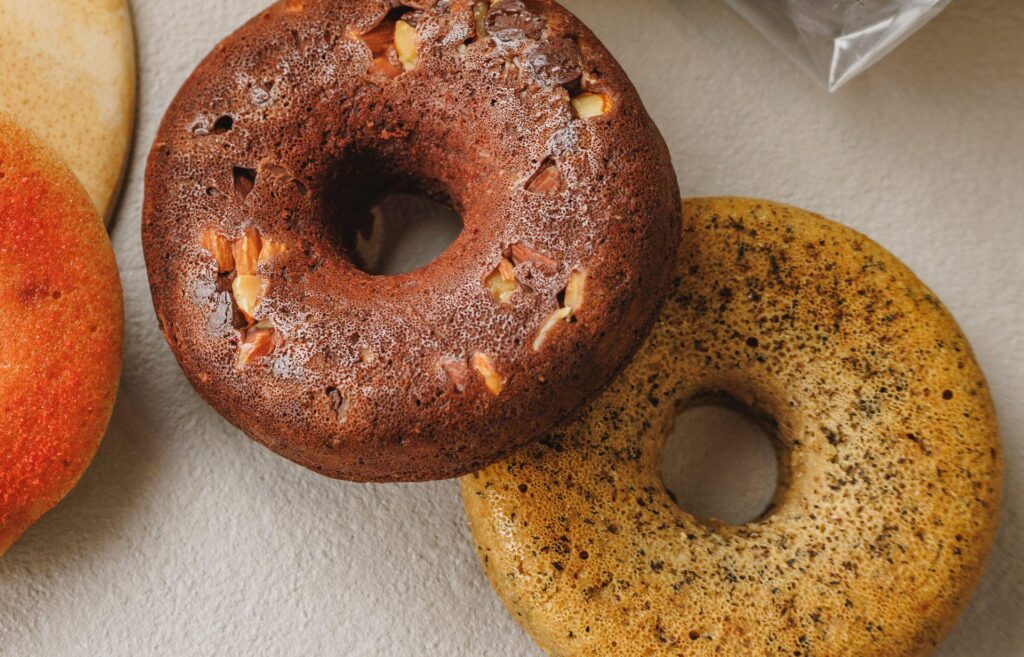
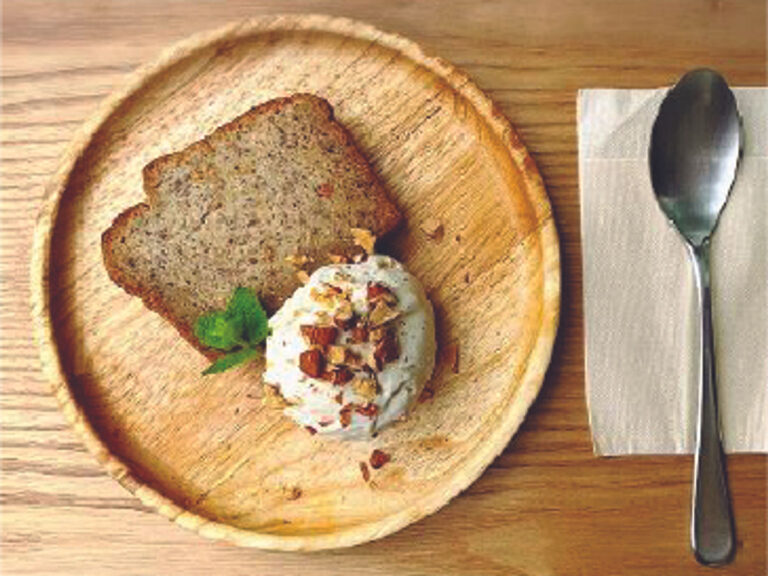
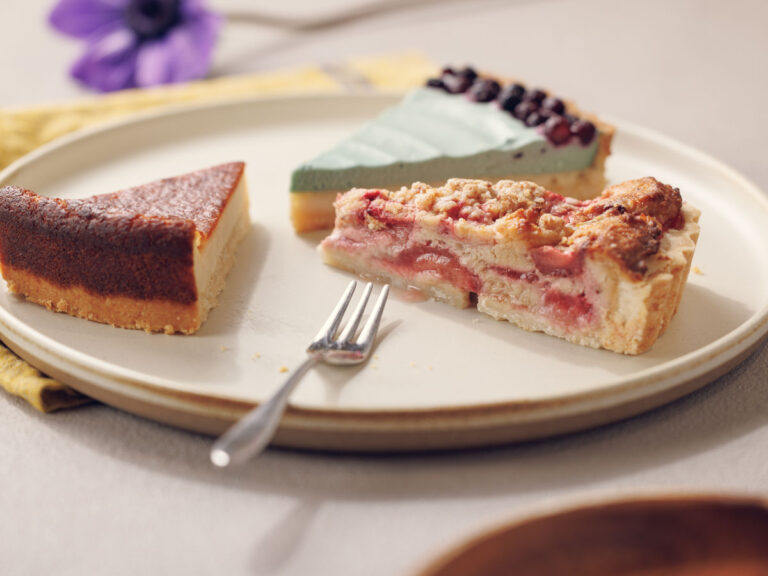
All L for You baked goods are vegan and made without wheat flour, eggs or dairy. We use soy milk (soy) in place of cow’s milk, and some flavors use walnuts and almonds. The table below shows the differences by flavor.
| Nuts | Soy | |
|---|---|---|
| Cookies (chocolate sandwich beet) | Almonds (almond flour) | Soy milk |
| Cookies (oatmeal) | Walnuts, almonds (almond flour) | Soy milk |
| Donuts (Earl Grey with raisin & mulberry / chocolate chip & almond / strawberry) | Almonds (almond flour) | Soy milk |
| Pound cake (dried fig & walnut cocoa) | Walnuts, almonds (almond flour) | Soy milk |
| Pound cake (chlorella & azuki bean) | Almonds (almond flour) | Soy milk |
| Pound cake (banana / chocolate chip banana) | Not used as an ingredient | Soy milk |
| Apple tart | Almonds (almond flour) | Soy milk |
In Japan, walnuts are a mandatory allergen, and almonds and soy are recommended to be labeled. Every flavor is made without wheat flour, eggs or dairy, but we cannot rule out trace contamination that comes from the raw materials themselves. Based on L for You’s ingredients as of October 31, 2026.
However, we cannot rule out trace contamination that comes from the raw materials themselves — for example, when an ingredient is grown or processed near wheat, eggs, dairy or nuts. If you have questions about a specific ingredient, please contact us and we will answer.
Please check the ingredients yourself and decide which to choose. Our baked goods are available in our online store (opens in a new tab; ships within Japan only) and at our shop in Minami-Aoyama.
Frequently Asked Questions
Visit Us
Cookies, donuts and pound cakes are always available at our shop in Minami-Aoyama. If you have questions about ingredients or allergens, please ask our staff before you buy.
| L for You AOYAMA | |
|---|---|
| Address | 1F Ikegami Bldg, 3-9-3 Minami-Aoyama, Minato-ku, Tokyo |
| Access | 6-minute walk from Omotesando Station, Exit A4 |
| Hours | Mon–Thu 11:00–20:00 / Fri 11:00–21:00 / Sat 9:30–21:00 / Sun 9:30–18:00 |
| Phone | +81-3-6459-2504 |
See how to find us, or browse the menu if you’d like to stay for a meal.