
Baked goods you were given, or sweets you bought several of at once — do you ever wonder how long they’ll keep, or whether you can freeze them? From reading the dates on a Japanese label to why shelf life differs and how to store them at room temperature or in the freezer, we have put it into tables.
In short: check how long baked goods keep by the best-before date (賞味期限) on the package. Drier ones such as cookies tend to keep longer at room temperature, and moist ones such as pound cake for less time. The date assumes the package is unopened, so eat them soon once opened.
- On Japanese labels, the best-before date (賞味期限) is how long food tastes its best; the use-by date (消費期限) is how long it is safe to eat.
- Both assume the package is unopened and stored as shown on the label. Once opened, eat it soon.
- How long baked goods keep depends on moisture, fat, packaging and storage temperature.
- You can freeze what you won’t eat soon — but freezing at home doesn’t extend the date.
Best-Before vs. Use-By Dates
In Japan, a package of sweets shows either a best-before date (賞味期限) or a use-by date (消費期限). The best-before date is how long the food tastes its best; the use-by date is how long it is safe to eat. Cookies and other baked goods usually carry a best-before date.
| Best-before (賞味期限) | Use-by (消費期限) | |
|---|---|---|
| Meaning | How long the food tastes its best | How long the food is safe to eat |
| Example foods | Snacks, instant noodles, canned foods and other foods whose quality changes relatively slowly | Boxed lunches, filled breads, ready-made dishes, fresh cakes, fresh noodles and other foods that spoil easily |
| After the date | It doesn’t become inedible right away | Don’t eat it |
| How it is written | Year, month and day. Foods that keep more than 3 months from manufacture may show only the year and month | Year, month and day |
Both assume the package is unopened and stored as shown on the label. Summarized from Japan’s Consumer Affairs Agency “Guidelines for Setting Food Date Labels” (March 2025) and the Ministry of Agriculture, Forestry and Fisheries’ “Use-by and Best-before Dates.”
The maker sets the date for each food, based on testing and other evidence. Japan’s Consumer Affairs Agency does not recommend dividing best-before and use-by dates by a set number of days (for example, 5 days) (Consumer Affairs Agency, “Guidelines for Setting Food Date Labels” (in Japanese; opens in a new tab)).
Shelf Life Depends on Moisture, Fat and Packaging
Even among baked goods, how long they keep differs greatly from product to product. Japan’s Consumer Affairs Agency explains that dates are set based on the food’s characteristics, the type of packaging, how it is stored and so on. For baked goods, these four make the biggest difference.
| How it changes | For example | |
|---|---|---|
| Moisture | The more moisture, the more easily it spoils and the shorter it tends to keep | Cookies are low in moisture; pound cakes and donuts are moist |
| Fat | Over time, contact with air and light oxidizes it, which can change the smell and flavor | Doughs that use a lot of butter or vegetable oil |
| Packaging | The less contact with air and moisture, the better the quality is kept | Individual bags, and bags with a desiccant or oxygen absorber |
| Storage temperature | Dates assume the food is kept as shown on the label (room temperature, refrigerated or frozen) | “Store away from direct sunlight, heat and humidity,” “Keep frozen” and so on |
General tendencies. The maker sets the date for each food based on its characteristics, packaging, how it is stored and so on.
How Long Each Type Tends to Keep, at Room Temperature and Frozen
Drier baked goods tend to keep longer at room temperature, moist ones for less time, and sweets with fresh cream or fresh fruit for less time still. The number of days differs by product, so always check the label on the package.
| How long they tend to keep | How to store | |
|---|---|---|
| Cookies, sablés, etc. | Low in moisture and keep well at room temperature | At room temperature, away from direct sunlight, heat and humidity. Watch out for moisture once opened |
| Pound cakes, madeleines, baked donuts, etc. | Moist, and tend to keep for less time than cookies | As shown on the package. Freeze what you won’t eat soon |
| Cakes with fresh cream or fresh fruit, etc. | Spoil easily, and often carry a use-by date | Refrigerate as shown on the label, and eat them well before the date |
General tendencies. Even within the same type, how long it keeps changes with the recipe and packaging. Always check the number of days on the package.
After Opening, and Freezing at Home
The date applies to the unopened package, stored as shown on the label. Japan’s Ministry of Agriculture, Forestry and Fisheries asks people to eat opened food soon, regardless of the date (Ministry of Agriculture, Forestry and Fisheries, “Use-by and Best-before Dates” (in Japanese; opens in a new tab)). Close the bag on anything you don’t finish, to keep out moisture and air.

Freezing is another option for what you won’t eat soon. Freezing at home changes the conditions from those on the label, so don’t assume the date is extended — eat them soon. For how to wrap and thaw each kind, see How to Store Cookies, How to Freeze and Warm Up Donuts and How to Store Rice Flour Pound Cake.
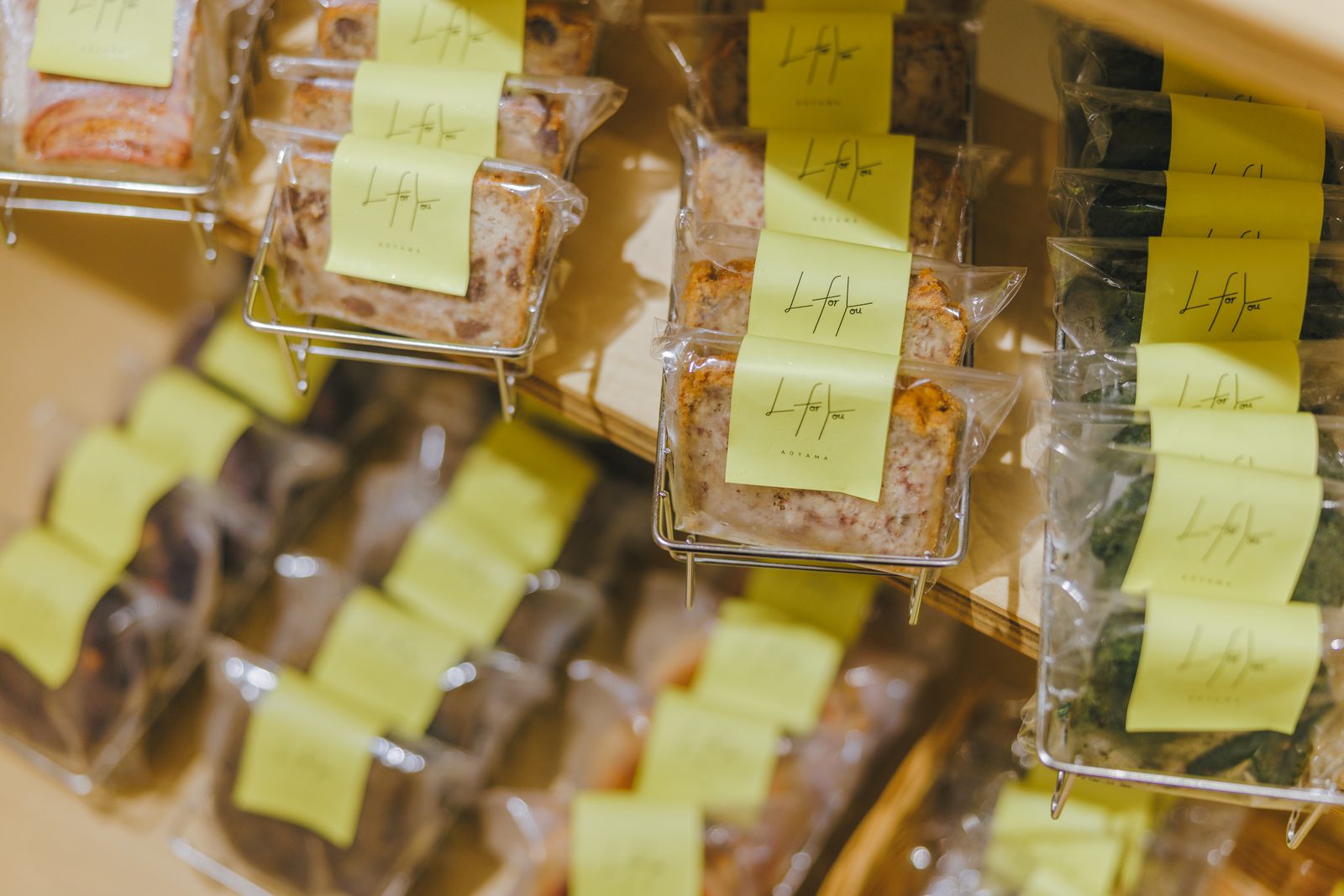
How Long L for You Baked Goods Keep, and How to Store Them
From our online store, our cookies arrive at room temperature, and our donuts and pound cakes arrive frozen. At our shop in Minami-Aoyama, they are all sold at room temperature.
| How long they keep / how they arrive | To keep them longer at home | |
|---|---|---|
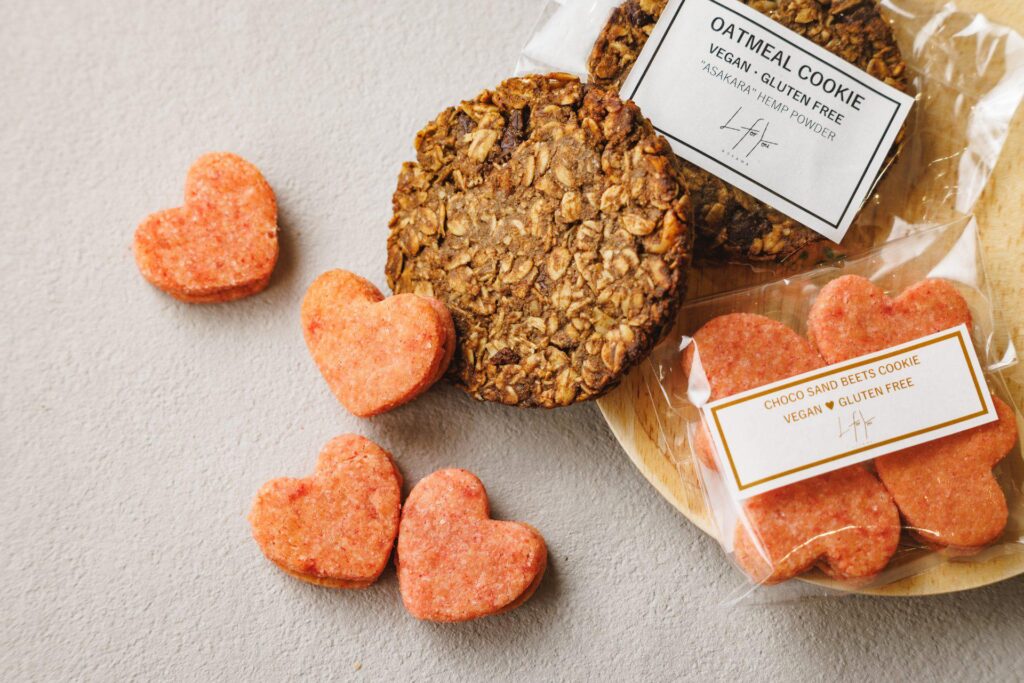
| Cookies (beet, oatmeal) | About 2 months from manufacture at room temperature. They also arrive at room temperature from the online store | You can freeze them in their bags. If they go soft, we recommend warming them lightly in a toaster and letting them cool |
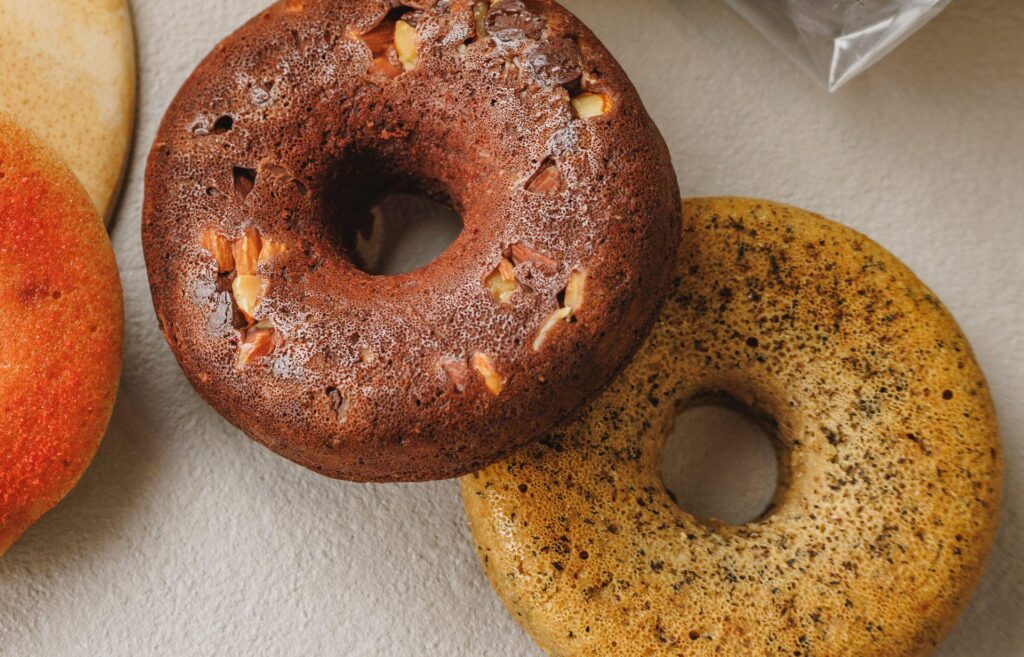
| Baked donuts (3 flavors) | Arrive frozen from the online store. Check the label for the date | Donuts bought at the shop can also be frozen in their bags. To eat, we recommend thawing them naturally in the bag |
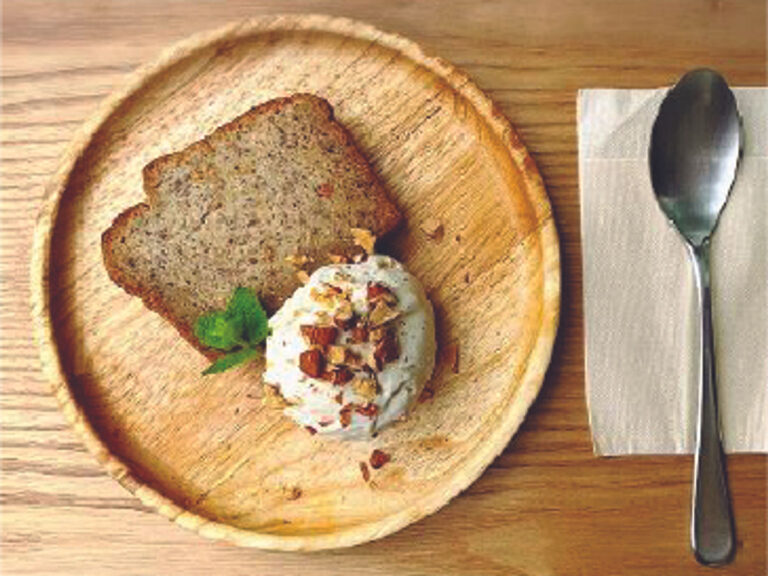
| Rice flour pound cakes (4 flavors) | Arrive frozen from the online store. Check the label for the date | Pound cakes bought at the shop can also be frozen in their bags. We recommend thawing them in the bag at room temperature, then warming them lightly in a toaster |
As of October 2026. The online store ships within Japan only. For the dates on donuts and pound cakes, see the product page in the online store, or ask our staff at the shop.

All our baked goods are vegan and made without wheat flour or white sugar (refined cane sugar); for sweetness we use beet sugar and a few other ingredients. Gift sets from our online store (opens in a new tab) can be delivered straight to the recipient — ships within Japan only (frozen delivery for some items). They are also always available at our shop in Minami-Aoyama (the flavors change from day to day).
We don’t use wheat flour, eggs or dairy, and no wheat is handled in our kitchen. However, we cannot rule out trace contamination that comes from the raw materials themselves — for example, when an ingredient is grown or processed near wheat, eggs or dairy. Some items contain nuts such as walnuts and almonds.
Frequently Asked Questions
Visit Us
Our cookies, donuts and pound cakes are sold at room temperature at our shop in Minami-Aoyama. We can gift-wrap them for you — just let us know at the register, and a cloth drawstring pouch is also available. If you have questions about ingredients or allergens, please ask our staff before you buy.
| L for You AOYAMA | |
|---|---|
| Address | 1F Ikegami Bldg, 3-9-3 Minami-Aoyama, Minato-ku, Tokyo |
| Access | 6-minute walk from Omotesando Station, Exit A4 |
| Hours | Mon–Thu 11:00–20:00 / Fri 11:00–21:00 / Sat 9:30–21:00 / Sun 9:30–18:00 |
| Phone | +81-3-6459-2504 |
See how to find us, or browse the menu if you’d like to stay for a meal.