

Looking for sweets that won’t make you gain weight, but not sure which to choose? To be honest, there is no sweet that won’t make you gain weight. Instead, this guide shows how to work out how much is in one serving from the label, and choose with that in mind.
In short: no. There is no sweet that won’t make you gain weight. What affects your weight is how much and how often you eat, more than the type of sweet. When choosing, check the energy (熱量) on the nutrition label, and whether the number is per 100 g or per piece. That tells you how much is in one serving.
- There is no sweet that won’t make you gain weight. How much and how often you eat matters more than the type of sweet.
- Calories appear as 熱量 (energy) on a Japanese nutrition label. Fat has about twice as much energy per gram as carbohydrate or protein.
- Check whether the numbers are per 100 g or per piece to see how much is in one serving.
- “Gluten-free,” “vegan” and “no white sugar” describe ingredients. They do not mean fewer calories.
Are There Sweets That Won’t Make You Gain Weight? It Depends on How Much You Eat
To be honest, there is no sweet that won’t make you gain weight. Whether you gain weight isn’t decided by one sweet, but by the balance between the energy you take in from everything you eat and the energy you use moving your body.
| Energy per gram (approx.) | In sweets | |
|---|---|---|
| Fat | About 9 kcal | Plentiful in butter, vegetable oil, nuts and chocolate |
| Carbohydrate | About 4 kcal | Plentiful in flour, sugar, fruit and dried fruit |
| Protein | About 4 kcal | Found in beans, nuts, egg and dairy |
Commonly used approximate energy conversion factors (Atwater factors). The energy on a nutrition label is a value found by analysis or calculation.
Most of the energy in sweets comes from fat and carbohydrate. At the same weight, sweets made with a lot of fat, nuts or chocolate tend to have more energy, so start by checking the numbers on the package.
Five Items on a Japanese Nutrition Label
Most packaged sweets in Japan have a nutrition label (栄養成分表示) on the back. Five items appear in this order: energy, protein, fat, carbohydrate and salt equivalent. This is Japan’s format; labels in other countries differ.
| What it tells you | What to check | |
|---|---|---|
| 熱量 energy | The amount of energy in the sweet (kcal) | How many grams the number is for |
| たんぱく質 protein | The amount of protein | Read it together with energy |
| 脂質 fat | The amount of fat, which has more energy per gram | How much of the energy comes from fat |
| 炭水化物 carbohydrate | Net carbohydrate and dietary fiber combined | Some products list 糖質 (net carbohydrate) and 食物繊維 (dietary fiber) separately |
| 食塩相当量 salt equivalent | The amount of salt | Worth checking on salty snacks |
The five items that Japan’s Food Labeling Standards (Consumer Affairs Agency) require on packaged processed foods.
Carbohydrate (炭水化物) is net carbohydrate and dietary fiber combined. For the differences between sweetness labels such as 糖類ゼロ and ノンシュガー, see Sweets Without Refined Sugar: What Japanese “No Sugar” Labels Mean.
Per 100 g or Per Piece? Check the Unit
The numbers on a nutrition label may be per 100 g, per piece, per bag and so on, depending on the product. Miss this, and you can misread how much is in one serving.
| How it is written | To find one piece | |
|---|---|---|
| Per 100 g | 100gあたり (per 100 g) | Multiply by the weight of one piece and divide by 100 |
| Per piece | 1個(25g)あたり (per piece, 25 g) | The number is already for one piece |
| Per bag | 1袋(4枚)あたり (per bag, 4 pieces) | Divide by the number of pieces in the bag |
| Per serving | 1食分(2枚)あたり (per serving, 2 pieces) | Check how many pieces count as one serving |
Example: for a sweet with 500 kcal per 100 g and 25 g per piece, one piece is about 125 kcal.
In the ingredient list (原材料名), ingredients are listed from the largest amount used, so you can also see what most of a sweet is made of. For the order to check the back of a bag at a convenience store, see Additive-Free (無添加) Snacks at Japanese Convenience Stores.
“Low Calorie,” “Calorie Off” and Labels That Aren’t About Calories
Some words on the front of a package have energy conditions set by Japan’s Food Labeling Standards (食品表示基準); others tell you about something other than calories. The conditions below are Japan’s, not those of the US, the UK or the EU.
| What the label tells you | Relation to calories | |
|---|---|---|
| カロリーゼロ・ノンカロリー zero calorie / non-calorie | Less than 5 kcal per 100 g (less than 5 kcal per 100 ml for drinks) | A label with an energy condition |
| 低カロリー・カロリー控えめ low calorie / lower calorie | 40 kcal or less per 100 g (20 kcal or less per 100 ml for drinks) | A label with an energy condition |
| カロリー○%カット など calories cut by ○%, etc. | At least 40 kcal per 100 g (20 kcal for drinks) and at least 25% less than the food it is compared with | What it is compared with is also shown |
| 糖質オフ・糖類ゼロ など carb off, zero sugars, etc. | Labels about the amount of carbohydrates or sugars | Check energy separately, in the energy line |
| グルテンフリー・ヴィーガン・白砂糖不使用 gluten-free / vegan / no white sugar used | Labels about ingredients that are not used | Not words about the amount of calories |
The energy conditions follow the nutrient-claim rules in Japan’s Food Labeling Standards (Consumer Affairs Agency), not the rules of other countries.
Gluten-free or vegan sweets made with rice flour, vegetable oil, nuts or sugar still have energy. The difference between the two words is set out in Gluten-Free vs. Vegan. For what “vegan” means on a Japanese label, see Vegan Sweets in Tokyo. What “guilt-free” refers to is covered in What Are “Guilt-Free” Sweets?.
Decide How Much to Eat Before You Start
If you want to eat less, deciding before you eat — “just one of these today” — may make it easier to keep going, don’t you think? Converting the label’s numbers to one piece and remembering them also helps the next time you choose.
| How | Why | |
|---|---|---|
| Choose individually wrapped sweets | Decide on one bag at a time | The amount in one serving is easy to see |
| Portion out large bags first | Put some on a small plate before eating | You can see how much you have eaten |
| Set a daily guide | Use the guide in Japan’s Food Balance Guide | About 200 kcal a day for sweets and treat drinks |
Japan’s Food Balance Guide (Ministry of Health, Labour and Welfare and Ministry of Agriculture, Forestry and Fisheries) suggests enjoying sweets and treat drinks “in moderation,” at about 200 kcal a day.
If a doctor or registered dietitian has given you instructions about what you eat, follow them.
L for You Baked Goods and How Much Is in One
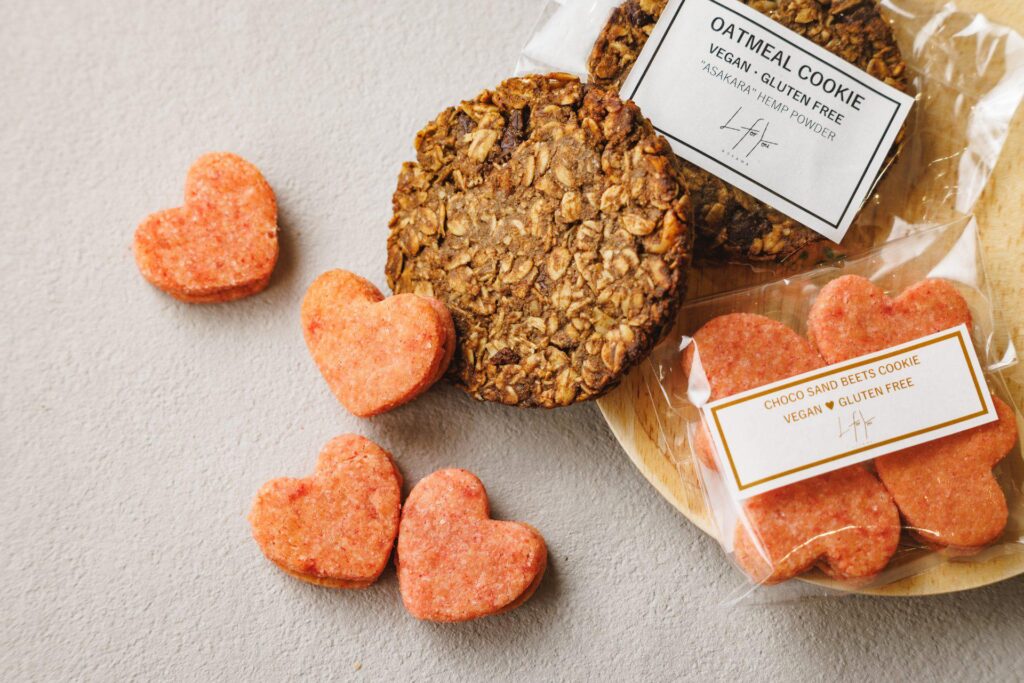
All L for You baked goods are vegan and made without wheat flour or white sugar (refined cane sugar); for sweetness we use beet sugar and a few other ingredients. This is about how we choose ingredients — they are not sweets made to cut calories.
| What is in one bag | |
|---|---|
| Cookies (chocolate sandwich, beet) | Four heart-shaped cookies |
| Cookie (oatmeal) | One large cookie, about 8 cm across |
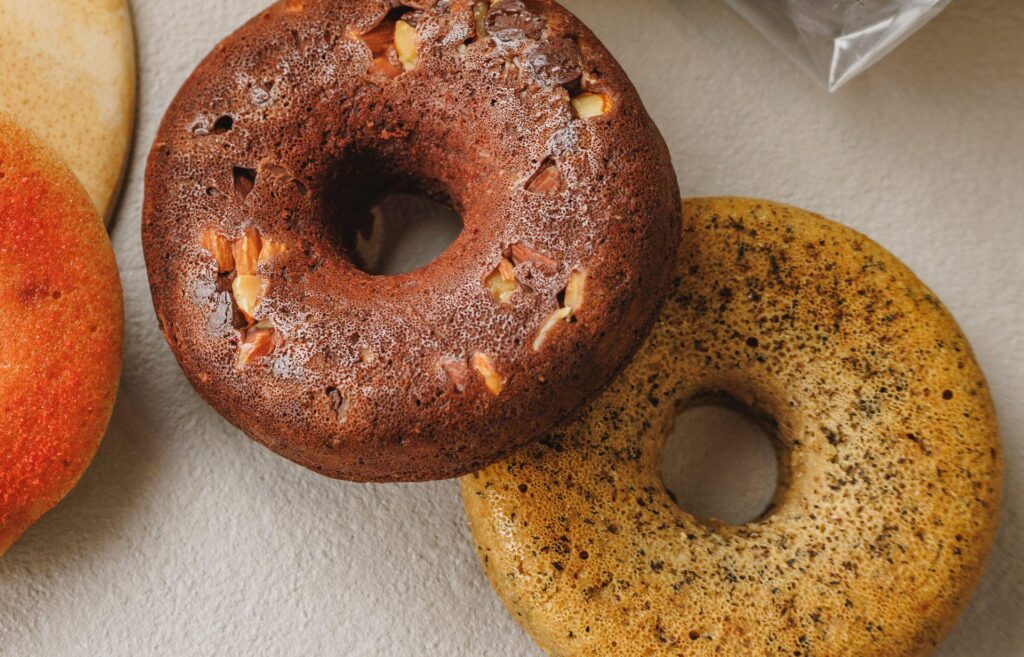
| Donut | One donut, about 10 cm across |
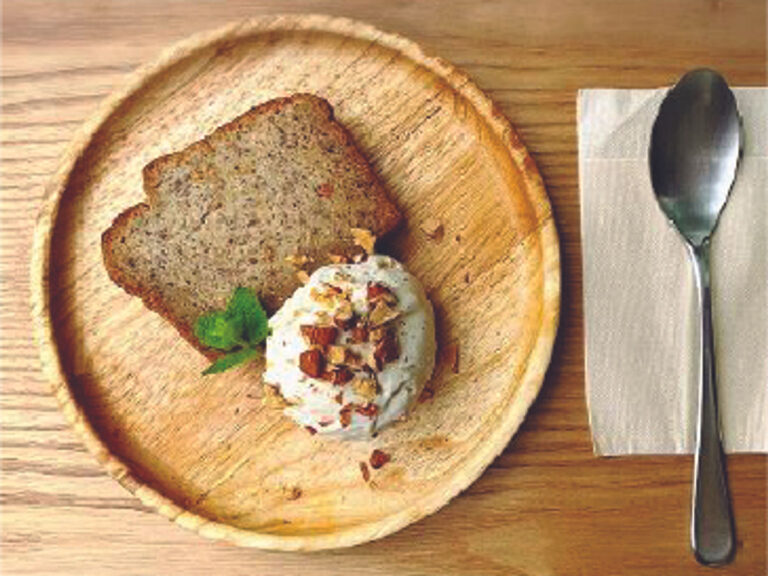
| Pound cake | One pound cake |
Based on our product labels as of October 25, 2026. Some items contain nuts such as walnuts and almonds.
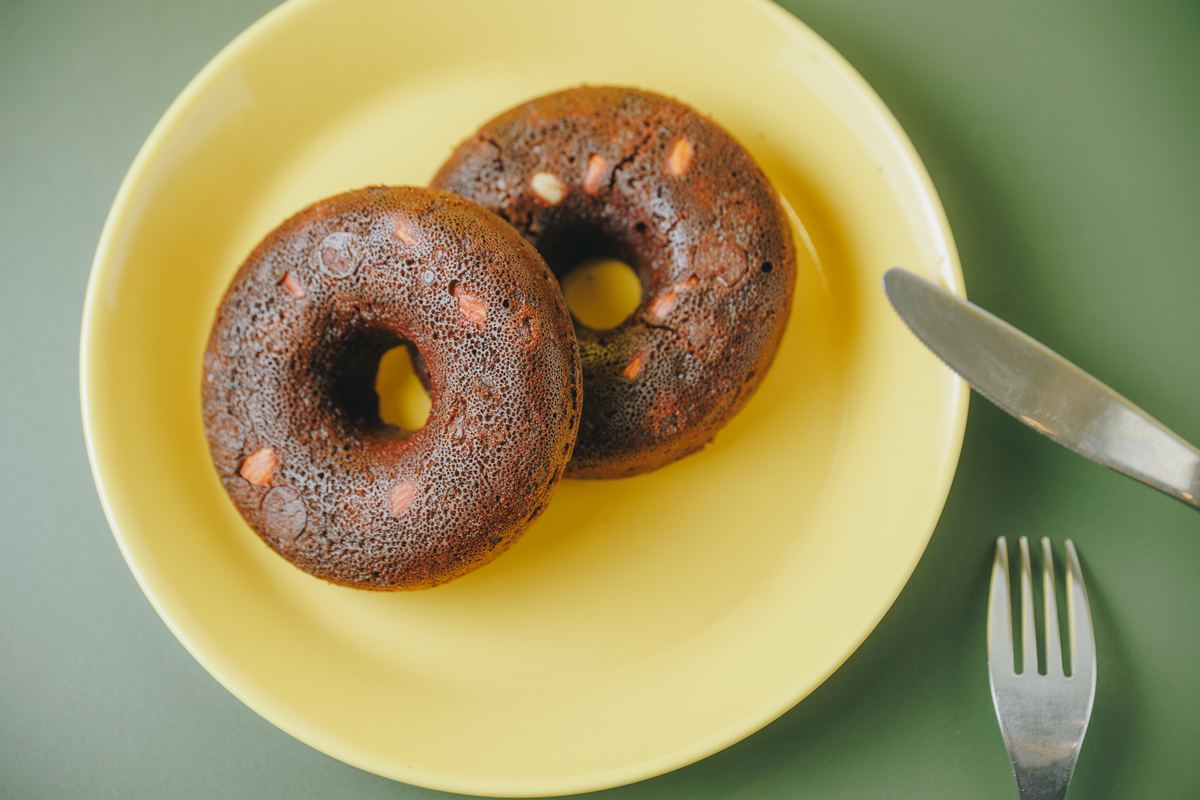
You can buy them at our shop in Minami-Aoyama, and our staff can tell you the ingredients and contents of each item.
We don’t use wheat flour, and no wheat is handled in our kitchen. However, we cannot rule out trace contamination that comes from the raw materials themselves — for example, when an ingredient is grown or processed near wheat. Some items contain nuts such as walnuts and almonds.
Frequently Asked Questions
Visit Us in Minami-Aoyama
L for You AOYAMA is a 6-minute walk from Omotesando Station. Our cookies, donuts and pound cakes are on the shelf every day; the flavors change from day to day.
| L for You AOYAMA | |
|---|---|
| Address | 1F Ikegami Bldg, 3-9-3 Minami-Aoyama, Minato-ku, Tokyo |
| Access | 6-minute walk from Omotesando Station, Exit A4 |
| Hours | Mon–Thu 11:00–20:00 / Fri 11:00–21:00 / Sat 9:30–21:00 / Sun 9:30–18:00 |
| Phone | +81-3-6459-2504 |
See access and opening hours and our menu before you visit.