Looking for sweets without sugar in Japan, you may find several similar words on the package: 砂糖不使用, ノンシュガー, 白砂糖不使用 and more. Have you ever wondered which is which? This guide explains what each label tells you, and how to choose according to what you are looking for.
In short: 砂糖不使用 (“no sugar used”) means no sugars were added; ノンシュガー (“non-sugar”) means less than 0.5 g of sugars per 100 g; 白砂糖不使用 (“no white sugar used”) means other kinds of sugar may still be used. Check the ingredient list and the nutrition label to see what sweetens a product and how much sugar it contains.
- 砂糖不使用 (no sugar used) and 糖類無添加 (no added sugars) mean no sugars were added. Sugars naturally present in fruit and other ingredients may still be there.
- ノンシュガー (non-sugar) and 糖類ゼロ (zero sugars) mean less than 0.5 g of sugars per 100 g of food. Sugar alcohols are not counted as sugars.
- Sweets labeled 白砂糖不使用 (no white sugar used) may be sweetened with beet sugar, maple syrup or other sugars and sweet ingredients.
- Find what sweetens a product in the ingredient list: before the slash 「/」 (sugar, syrup, fruit and so on) and after it (sweetener additives).
砂糖不使用, ノンシュガー and 白砂糖不使用 Mean Different Things
A package of sweets can carry several words about sweetness. Some have conditions set by Japan’s Food Labeling Standards (食品表示基準), and some have none. These are Japan’s rules, not those of the US, the UK or the EU. Start with the differences in the table.
| What the label tells you | Where to look | |
|---|---|---|
| 砂糖不使用・糖類無添加 no sugar used / no added sugars | No sugars, and no ingredients used in their place (such as jam or concentrated fruit juice), were added. Sugars naturally present may still be there | The amount of sugars on the nutrition label |
| ノンシュガー・シュガーレス・糖類ゼロ・無糖 non-sugar / sugarless / zero sugars / no sugar | Less than 0.5 g of sugars per 100 g of food | Whether sugar alcohols or sweeteners are used |
| 低糖・微糖 low sugar / slightly sweetened | 5 g of sugars or less per 100 g of food (2.5 g or less per 100 ml for drinks) | The amount of sugars on the nutrition label |
| 甘さ控えめ lightly sweet | A description of taste. There is no standard for the amount of sugars | Sugars or carbohydrates on the nutrition label |
| 白砂糖不使用 no white sugar used | Says that white sugar is not used. Other sugars or sweet ingredients may be | What sweetens it, in the ingredient list |
| 甘味料(○○) sweetener (name) | A sweetener additive is used | After the slash 「/」 in the ingredient list |
General meanings under Japan’s Food Labeling Standards (Consumer Affairs Agency), not the rules of other countries. “Sugars” here means glucose, fructose, sucrose (table sugar), lactose and the like; sugar alcohols are not included.
砂糖不使用 does not mean the product isn’t sweet. Sugars naturally present in fruit and other ingredients may be in it, so check the ingredient list to see what sweetens it.
Find What Sweetens It in the Ingredient List
In the ingredient list (原材料名, genzairyō-mei), ingredients usually come first, from the largest amount used, followed by food additives after a slash 「/」. Sweet ingredients can appear on either side.
| Examples as written on the label | Where they appear | |
|---|---|---|
| Sugars | 砂糖 (sugar), 上白糖 (jōhakutō, soft white sugar), グラニュー糖 (granulated sugar), てんさい糖 (beet sugar), きび糖 (kibi sugar), 黒糖 (kokutō, brown sugar) | Before 「/」 (ingredients) |
| Syrups and honey | メープルシロップ (maple syrup), アガベシロップ (agave syrup), はちみつ (honey), 水あめ (starch syrup) | Before 「/」 (ingredients) |
| Naturally sweet ingredients | Fruit, dried fruit, fruit juice, sweetened chocolate | Before 「/」 (ingredients) |
| Sugar alcohols | 還元水あめ (hydrogenated starch syrup), マルチトール (maltitol), エリスリトール (erythritol) | Among the ingredients or among the additives |
| Sweetener additives | 甘味料(ステビア) (sweetener: stevia), 甘味料(スクラロース) (sweetener: sucralose) | After 「/」 (additives) |
Instead of 「/」, some labels separate additives with a line break or a separate line. Ingredients are listed from the largest amount used.
Even sweets labeled 白砂糖不使用 may use beet sugar, maple syrup or other sugars and sweet ingredients.
Choose According to What You Are Looking For
People look for sweets without sugar for different reasons, don’t they? Whether you want less sugar, no sweetener additives, or no white sugar changes which label you need to read.
| What to look for | Keep in mind | |
|---|---|---|
| Less sugar | ノンシュガー or 低糖 on the front, and the amount of sugars (糖類) on the nutrition label | If sugars are not listed, look at carbohydrates (炭水化物) |
| No sweetener additives | No 甘味料(○○) after 「/」 in the ingredient list | 砂糖不使用 alone does not tell you |
| No white sugar | 白砂糖不使用 on the front, and the type of sugar in the ingredient list | If it only says 砂糖 (sugar), you can’t tell the type |
| A gift for someone vegan | No honey or other animal-derived ingredients in the ingredient list | Check for egg and dairy in the ingredient list too |
If a doctor or registered dietitian has given you instructions about what you eat, follow them.
Whatever your reason, don’t decide on the words on the front alone. Reading the ingredient list and the nutrition label on the back together gives you a clearer picture. For where to start on the back of the bag, see Additive-Free (無添加) Snacks at Japanese Convenience Stores.
Sweetness in L for You Baked Goods: No Refined Cane Sugar, Beet Sugar Instead
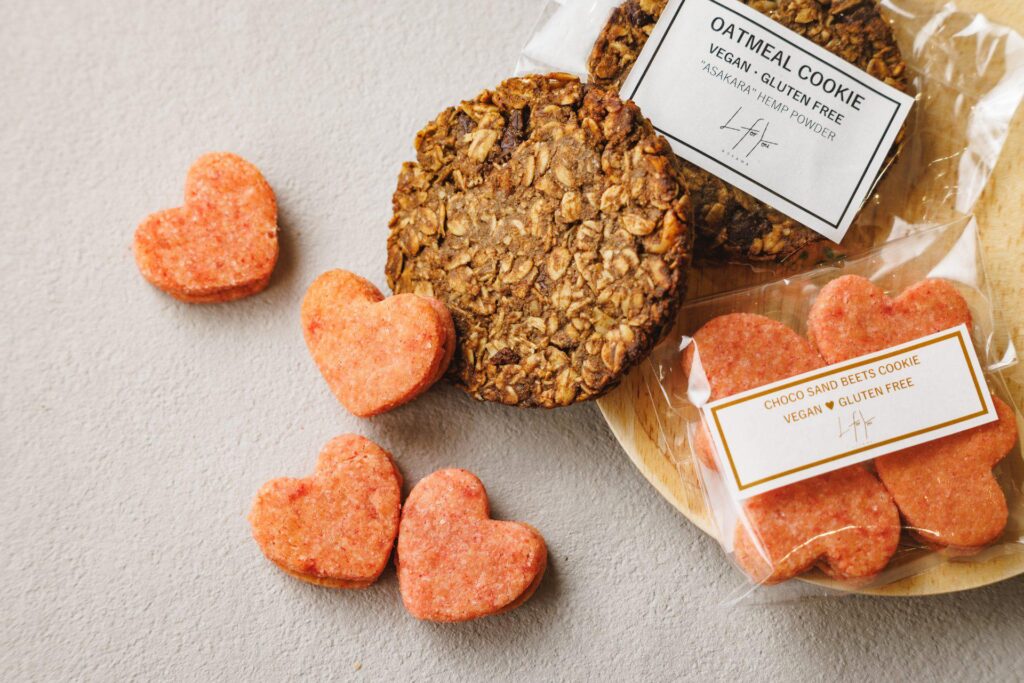
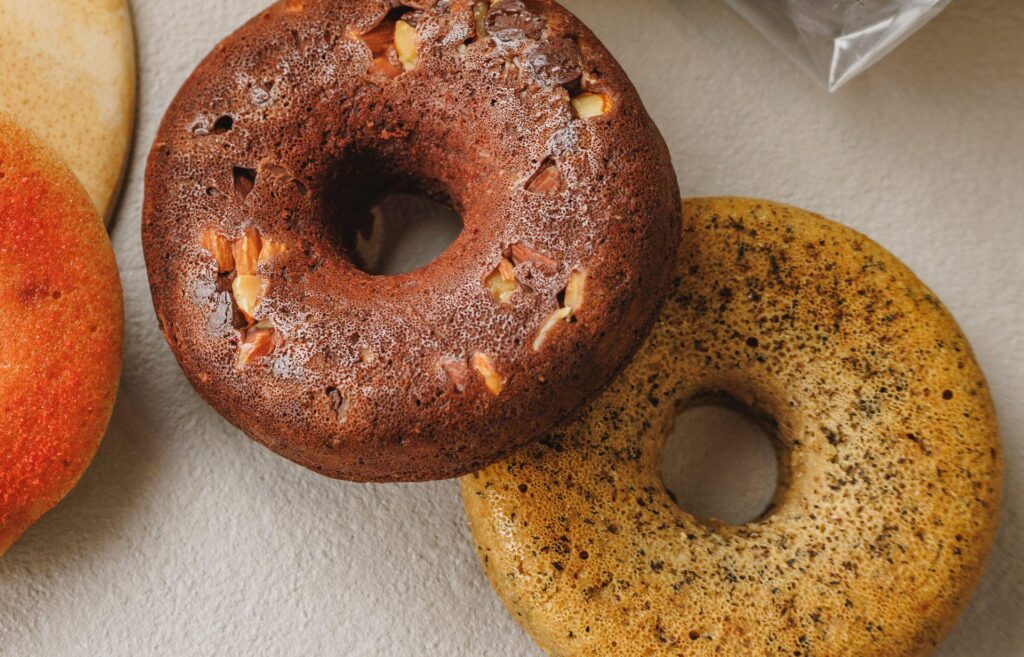
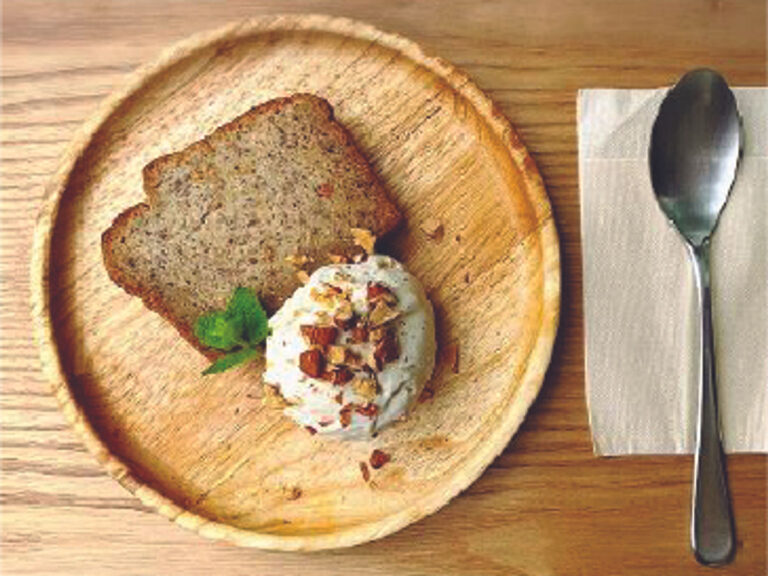
All L for You baked goods are vegan and made without wheat flour or white sugar (refined cane sugar). For sweetness we use beet sugar, made from sugar beets, and a few other ingredients. Beet sugar is still sugar, so our sweets are not “no sugar used” sweets. For how beet sugar differs from white sugar (上白糖 and granulated sugar), see What Is Beet Sugar?; to bake with it at home, there is a recipe for Rice Flour Brownies.
| Sweet ingredients (from the ingredient list) | |
|---|---|
| Cookies (chocolate sandwich, beet) | 有機てんさい粉 (organic beet sugar), organic agave syrup, organic agave chocolate |
| Cookie (oatmeal) | 有機てんさい粉 (organic beet sugar), organic agave chocolate |
| Donuts | 有機てんさい粉 (organic beet sugar). Depending on the flavor, strawberry, dried fruit or organic agave chocolate |
| Pound cakes | 有機てんさい粉 (organic beet sugar). Depending on the flavor, banana, dried fig or chocolate chips |
Based on our ingredient labels as of October 22, 2026. Labels can change, so ask our staff for the current one. Some items contain nuts such as walnuts and almonds.

You can buy these baked goods at our shop in Minami-Aoyama, and our staff can tell you the ingredients of each one. Check what sweetens each item before you choose.
We don’t use wheat flour, and no wheat is handled in our kitchen. However, we cannot rule out trace contamination that comes from the raw materials themselves — for example, when an ingredient is grown or processed near wheat. Some items contain nuts such as walnuts and almonds.
Frequently Asked Questions
Visit Us in Minami-Aoyama
L for You AOYAMA is a 6-minute walk from Omotesando Station. Our cookies, donuts and pound cakes are on the shelf every day; the flavors change from day to day.
| L for You AOYAMA | |
|---|---|
| Address | 1F Ikegami Bldg, 3-9-3 Minami-Aoyama, Minato-ku, Tokyo |
| Access | 6-minute walk from Omotesando Station, Exit A4 |
| Hours | Mon–Thu 11:00–20:00 / Fri 11:00–21:00 / Sat 9:30–21:00 / Sun 9:30–18:00 |
| Phone | +81-3-6459-2504 |
See access and opening hours and our menu before you visit.