
Looking for vegan sweets in Tokyo? Cakes and cookies in Japan often use butter, eggs or milk, and the ingredient list is in Japanese. Even a pack that says “vegan” may not mean exactly what you expect.
This guide explains what the word promises in Japan, which Japanese words point to animal ingredients, and how vegan differs from gluten-free. At the end: what we bake at L for You AOYAMA, a 6-minute walk from Omotesando Station.
What “Vegan” on a Japanese Label Promises
Japan’s food labeling rules set no conditions for the word ヴィーガン (vīgan, vegan), so how strict it is depends on the maker. The same goes for プラントベース (plant-based), which can include some animal ingredients.
| Who decides | How to check | |
|---|---|---|
| ヴィーガン vīgan / vegan | The maker, on its own. Japan's labeling rules set no conditions for the word | Read 原材料名 (ingredients), or ask the shop |
| プラントベース purantobēsu / plant-based | The maker, on its own. Means plant-centered, and may include some animal ingredients | Read 原材料名 |
| 卵・乳不使用 no egg, no dairy | A statement about the ingredients | Confirm in 原材料名. It says nothing about honey or gelatin |
| JAS certification JAS 0025 | A certification body checks the product against a national standard. Optional | Look for the certification mark on the pack |
JAS 0025, “Processed foods suitable for vegetarians or vegans,” was set by Japan's Ministry of Agriculture, Forestry and Fisheries in September 2022. Getting certified is voluntary.
In 2022, Japan added a national standard for “processed foods suitable for vegetarians or vegans” (JAS 0025). It sets which ingredients may not be used and how makers keep them out. Certification is optional, so a missing mark does not mean animal ingredients are used.
Japanese Words That Point to Animal Ingredients
The quickest check is the ingredient line, 原材料名 (genzairyō-mei). Egg and milk must be declared as allergens on packaged food. Honey, lard and gelatin do not have to appear in the allergy note, so read the whole line.
| Reading and meaning | Keep in mind | |
|---|---|---|
| 卵 / 卵白 / 卵黄 | tamago / ranpaku / ran'ō — egg, egg white, egg yolk | Must be declared as an allergen. Shown as 卵 |
| 乳 / 牛乳 / 全粉乳 / 脱脂粉乳 | nyū / gyūnyū / zenfunnyū / dasshi funnyū — milk, whole and skimmed milk powder | Must be declared. Shown as 乳成分 in the allergy note |
| バター / 生クリーム / 乳等を主要原料とする食品 | batā / nama-kurīmu — butter, cream, and food made mainly from milk | Covered by the milk declaration. Chocolate often contains milk too |
| ゼラチン | zerachin — gelatin | Recommended, but not required, in the allergy note. Used to set jellies and mousses |
| はちみつ | hachimitsu — honey | Not part of the allergy note. Found only in the ingredient list |
| ラード / 牛脂 / 動物油脂 | rādo / gyūshi / dōbutsu yushi — lard, beef tallow, animal fat | Not required in the allergy note. Read the ingredient list |
| ショートニング | shōtoningu — shortening | Usually made from vegetable oils, but some contain animal fat. The label may not say which |
| コチニール色素 | kochinīru shikiso — cochineal, a red color made from insects | An additive, listed after the / mark |
Based on Japan's labeling rules for packaged food. Sweets sold unwrapped, and desserts served in cafes, are outside these rules — ask the staff.
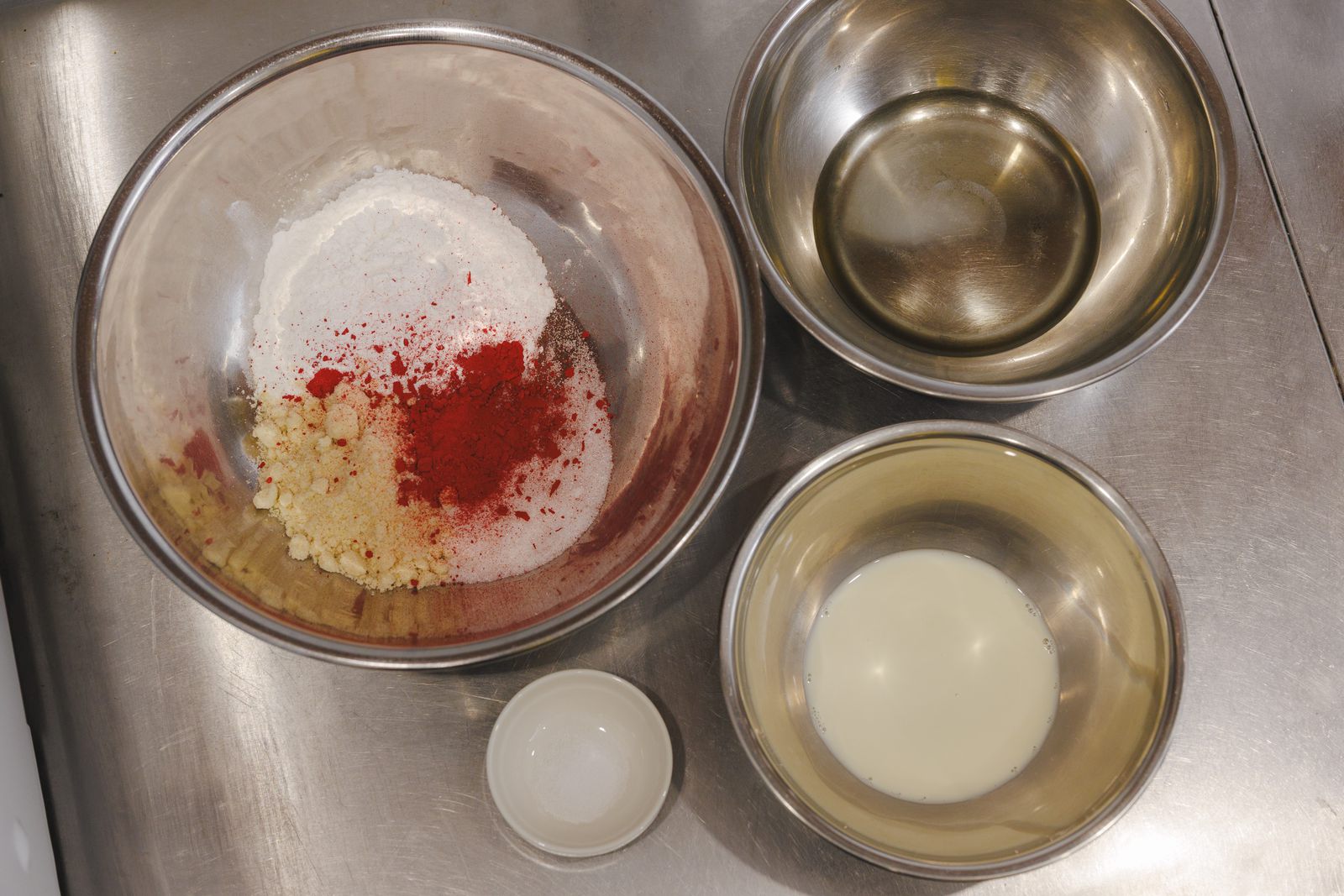
Sweets sold unwrapped at a bakery or cafe may have no label at all. In that case, ask the staff — a phrase you can show is in the FAQ below.
Vegan and Gluten-Free Are Not the Same
The two words often sit side by side on a pack, but they are about different things. Gluten-free is about wheat, barley and rye; vegan is about animal ingredients. One label does not tell you the other. To see what each avoids, with food examples, see Gluten-Free vs. Vegan.
| Gluten-free | Vegan | |
|---|---|---|
| What it avoids | Gluten, a protein in wheat, barley and rye | Meat, fish, eggs, dairy, honey and other animal-derived ingredients |
| Fits only this one | A rice-flour cake made with eggs and butter | Bread made with wheat flour but no butter or milk |
| On a Japanese label | 小麦 (wheat) must be declared. Barley and rye need not be | 卵 (egg) and 乳 (milk) must be declared. Honey and lard need not be |
| What the label leaves out | “Gluten-free” says nothing about animal ingredients | “Vegan” says nothing about wheat |
General differences. How strictly each one is followed differs from person to person.
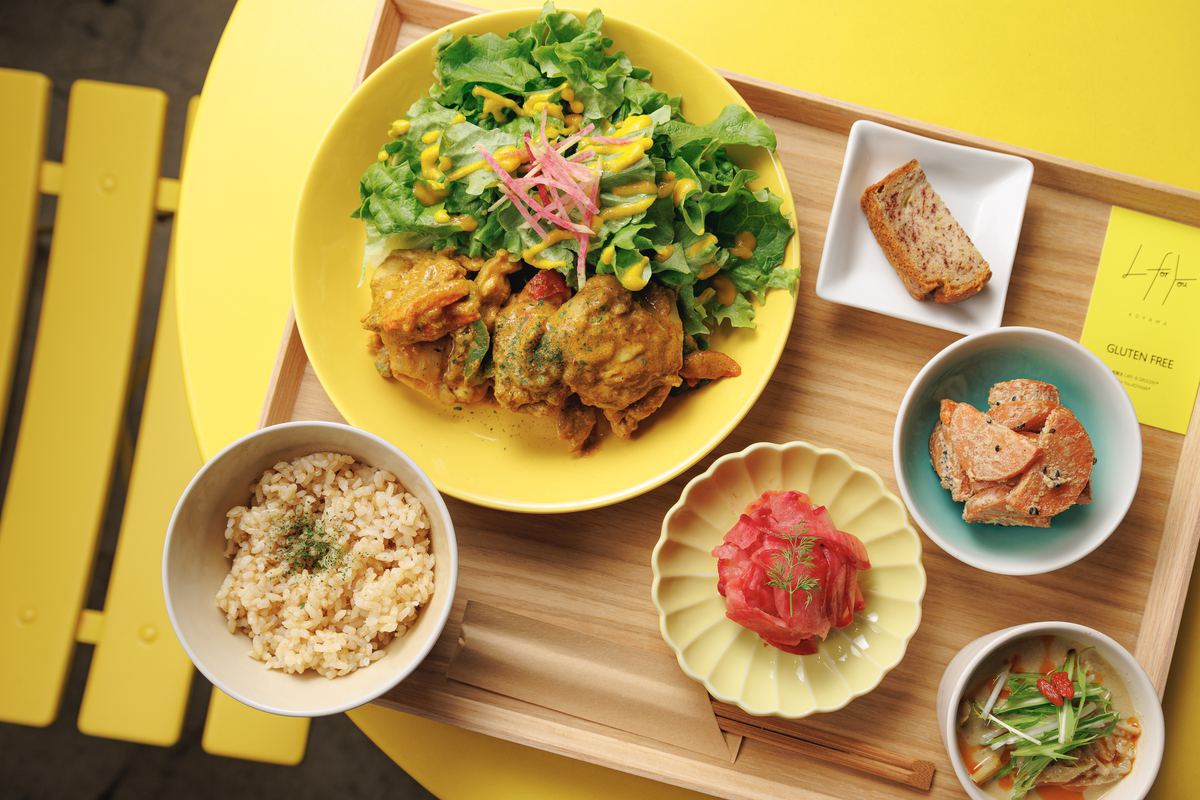
At our cafe, many dishes are vegan, while some include fish, chicken or pork. For meals, see our guide to vegan and plant-based dining in Omotesando. For wheat on labels, see how to read Japanese food labels for wheat and gluten.
Our Vegan Baked Goods in Minami-Aoyama

All of our baked goods are vegan — no eggs, dairy, honey or gelatin — and made without wheat flour. We use organic coconut oil and rice oil instead of butter, and organic soy milk instead of milk.
We don’t use refined cane sugar; we sweeten with beet sugar and agave syrup, among others. We have not obtained JAS or any other vegan certification. Instead, our staff can tell you what goes into each item.
| In each bag | Good to know | |
|---|---|---|
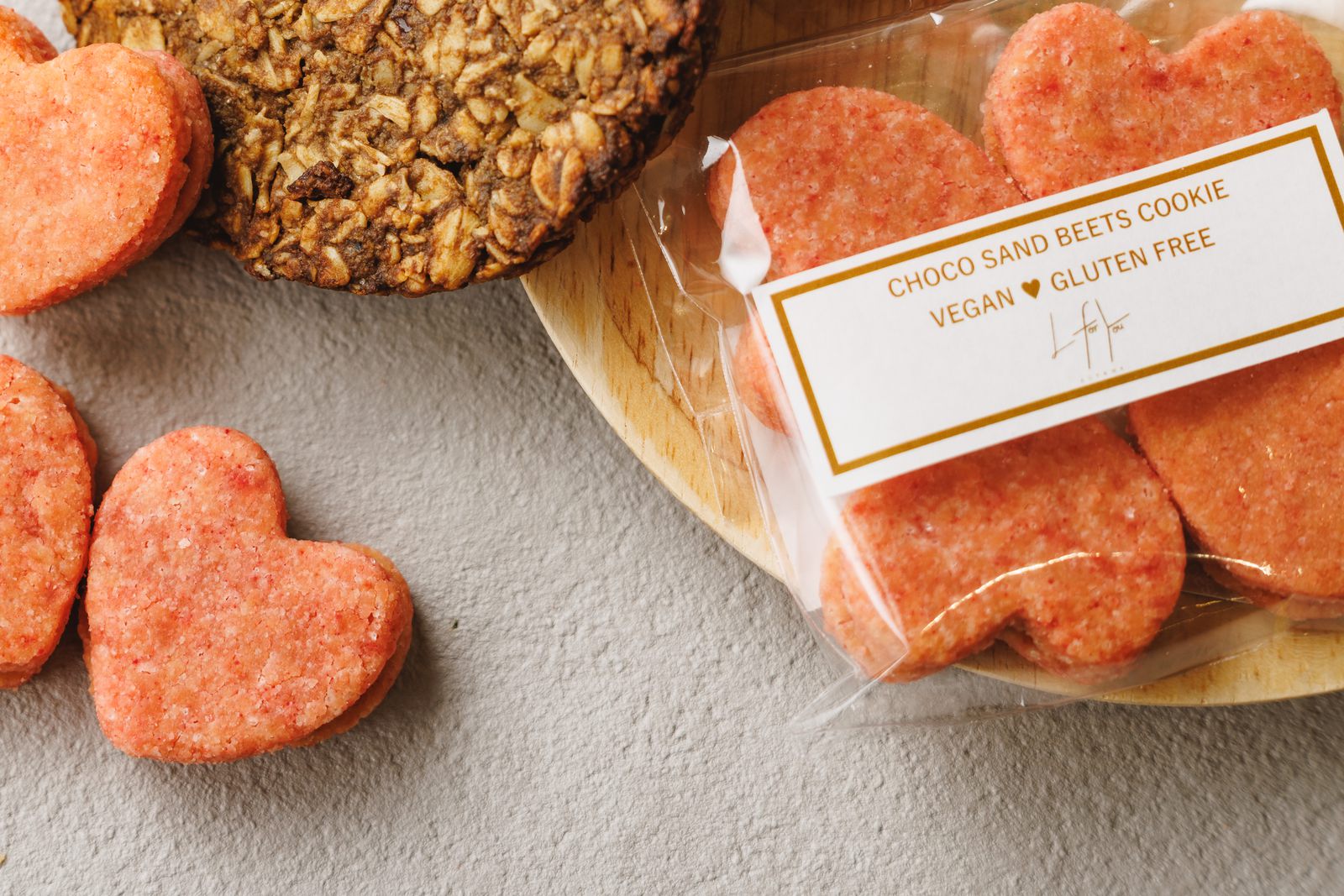
| Cookies | Heart-shaped beet cookies (4), or one large oatmeal cookie | No rum. The oatmeal cookie contains walnuts and almonds |
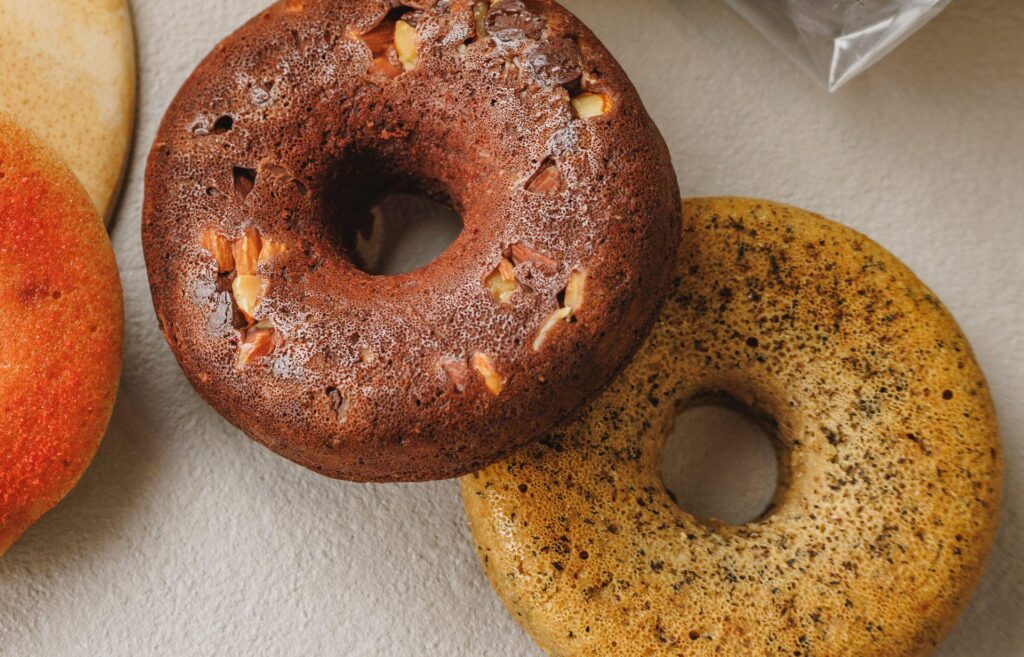
| Donuts | One baked donut | No rum. Some flavors contain nuts |
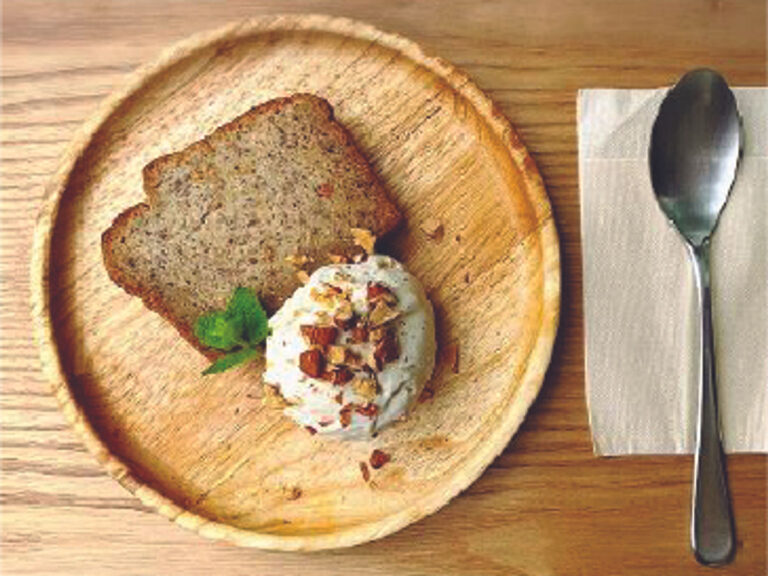
| Pound cakes | One piece | The banana, chocolate-chip banana, and dried fig & walnut cocoa flavors contain rum |
Based on our product labels (October 2026). Flavors change from day to day; please ask our staff about each item.
We don’t use wheat flour, and no wheat is handled in our kitchen. However, we cannot rule out trace contamination that comes from the raw materials themselves — for example, when an ingredient is grown or processed near wheat.
The same applies to eggs and dairy: we don’t use them, but we cannot rule out traces that come from the raw materials themselves. Some items contain nuts such as walnuts and almonds.
Buying Them at Our Shop
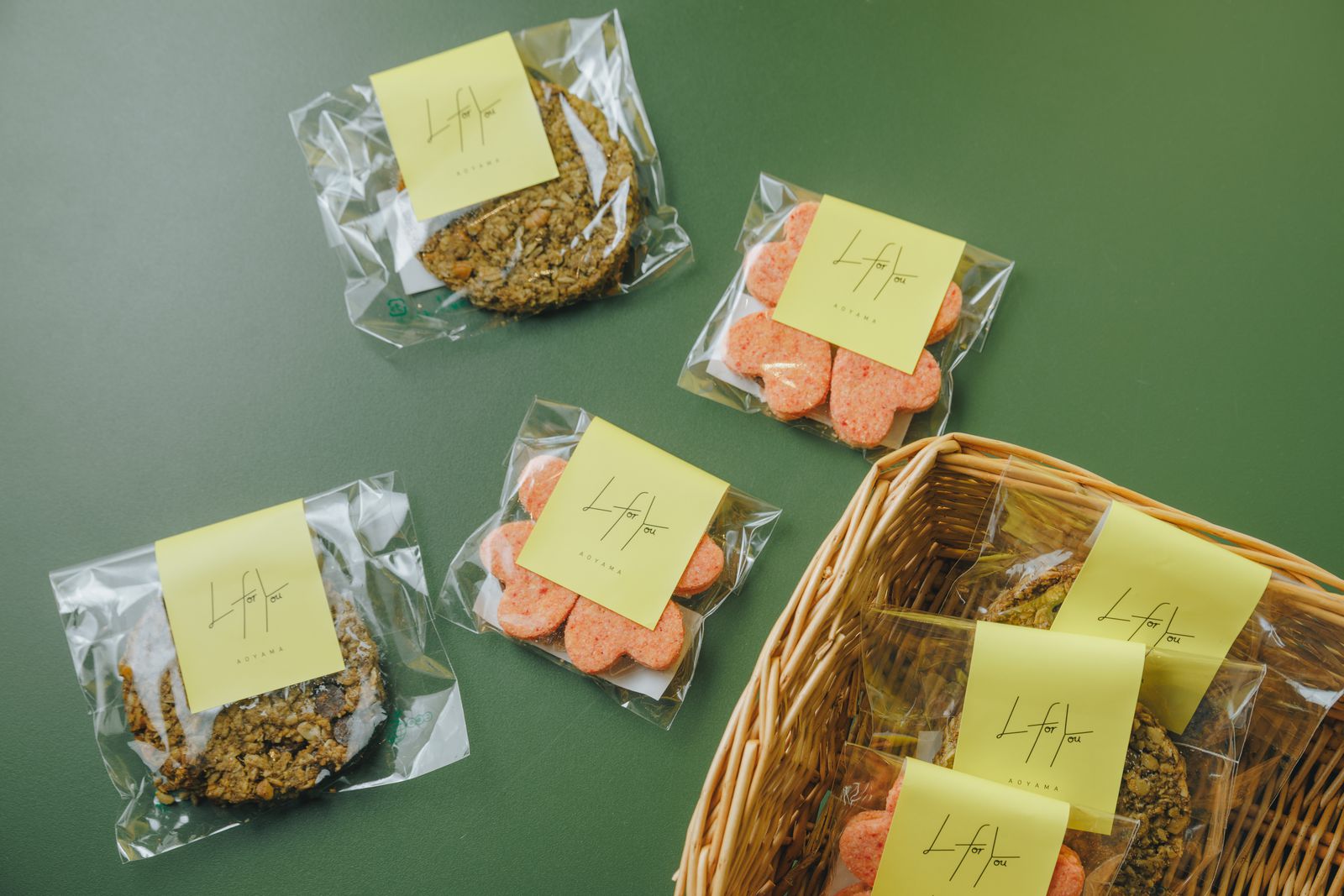
Cookies, donuts and pound cakes are always available at the shop, each in its own bag. Flavors change from day to day, so please see what is on the shelf. We can gift-wrap them — just let our staff know when you pay.
Taking some home? Our guide to gluten-free and vegan souvenirs from Tokyo covers what to check before you pack them.
Frequently Asked Questions
Visit Us
| L for You AOYAMA | |
|---|---|
| Address | Ikegami Building 1F, 3-9-3 Minami-Aoyama, Minato-ku, Tokyo |
| Access | 6-minute walk from Omotesando Station, Exit A4 |
| Hours | Mon–Thu 11:00–20:00 / Fri 11:00–21:00 / Sat 9:30–21:00 / Sun 9:30–18:00 |
| Phone | +81-3-6459-2504 |
See how to find us, or browse the menu if you’d like to stay for a meal.
Sources (checked October 25, 2026)
- Ministry of Agriculture, Forestry and Fisheries: JAS 0025 Processed foods suitable for vegetarians or vegans (2022, Japanese, PDF)
- Consumer Affairs Agency: Handbook on allergy labeling for processed foods (April 2026, Japanese, PDF)
- Consumer Affairs Agency: How additives are shown on labels (Japanese, PDF)