While breastfeeding, you may find yourself checking the ingredients even when you choose a snack. What to avoid is your own decision. This guide covers where to look on a Japanese ingredient list (原材料名, genzairyō-mei), and what makes a snack easy to eat between feeds.
Look in the ingredient list for ingredients that contain alcohol, such as liquor, rum or 酒精 (shusei, ethyl alcohol), and for ingredients that contain caffeine, such as chocolate, cocoa, black tea and matcha. What to avoid is up to you; also check whether the snack is individually wrapped and keeps at room temperature.
- Ingredients that contain alcohol appear in the ingredient list as 洋酒 (liquor), ラム酒 (rum), リキュール (liqueur), 酒精 (ethyl alcohol) and so on.
- Ingredients that contain caffeine include chocolate, cocoa, black tea, matcha, green tea and coffee.
- The ingredient list cannot tell you how much alcohol remains after baking, or how much caffeine there is.
- What to avoid is your own decision. Also check whether a snack is easy to eat between feeds: individual wrapping, shape and storage.
How Ingredients Containing Alcohol or Caffeine Appear on the Label
Ingredients are listed from the largest amount down. Ingredients that contain alcohol or caffeine are often used in small amounts, so they may appear near the end of the list.
| How it may be written | Sweets it may be used in | |
|---|---|---|
| Alcohol (liquor) | 洋酒 (liquor), ラム酒 (rum), ブランデー (brandy), リキュール (liqueur) | Pound cake, fruitcake, baked goods with dried fruit |
| Alcohol (ethyl alcohol) | 酒精 (shusei) | Packaged cakes, bread and so on |
| Cacao | チョコレート (chocolate), 準チョコレート (semi-chocolate), カカオマス (cacao mass), ココア (cocoa) | Chocolate sweets, baked goods with chocolate chips, cocoa-flavored sweets |
| Tea leaves | 紅茶 (black tea), アールグレイ (Earl Grey), 抹茶 (matcha), 緑茶 (green tea), ほうじ茶 (hōjicha) | Black tea or matcha baked goods, Japanese sweets |
| Coffee | コーヒー (coffee), エスプレッソ (espresso) | Tiramisu, coffee-flavored sweets |
These are general examples. For each product, its own label is what counts. Cacao, tea leaves and coffee are ingredients that contain caffeine.
The ingredient list tells you whether an ingredient is used. It does not tell you how much alcohol remains after baking, or how much caffeine there is. If you want to know, you can also ask the shop or the maker.
What Public Agencies in Japan Say About Alcohol and Caffeine While Breastfeeding
Japan’s Ministry of Health, Labour and Welfare and other public agencies publish information on alcohol and caffeine while breastfeeding. Here are the main points, with their sources.
| About | What it says | |
|---|---|---|
| Ministry of Health, Labour and Welfare: Guidelines on drinking with health in mind (2024) | Drinking alcohol | Lists “drinking during pregnancy or while breastfeeding” as one of the cases in which drinking should be avoided |
| Ministry of Health, Labour and Welfare: Q&A on excessive caffeine intake from food | Caffeine intake | Notes that no acceptable daily intake has been set in Japan or internationally, and introduces Health Canada's advice that breastfeeding women and others should have no more than 300 mg a day |
| Food Safety Commission of Japan: Caffeine in food (fact sheet) | Foods that contain caffeine | Explains that caffeine occurs naturally in coffee beans, tea leaves, cacao beans and more |
None of these is about sweets alone. Please see each agency's original text for details.
You can read the original texts (in Japanese, opens in a new tab): Guidelines on drinking with health in mind (PDF), Q&A on excessive caffeine intake from food and Fact sheet: caffeine in food (PDF).
What to avoid is your own decision. This article sums up what you can check on an ingredient list; it does not judge whether a food is right for you to eat.
Between Feeds: Choose by Shape, Amount and Storage Too
Between feeds, there may not be time to sit down and put a snack on a plate. Looking at the shape, the amount and how it is stored, as well as the ingredients, helps you choose a snack that is easy to reach for.
| What to check | Why it matters | |
|---|---|---|
| Individual wrapping | Whether each piece is in its own bag | You can eat a little and leave the rest as it is |
| Shape and size | Whether you can hold it in one hand, and whether it makes crumbs | Your hands may be full holding the baby |
| Storage | Room temperature or frozen, and the best-before date | To see whether you can keep some in and take one out when you want |
| Amount | How much one piece is | An amount you can finish in a short break is easier to reach for |
If you stock up, think about whether it keeps at room temperature, or whether you have room in the freezer. For family and friends choosing a gift for a new baby, see Sweets as a Baby Gift in Japan.
Looking at L for You Baked Goods
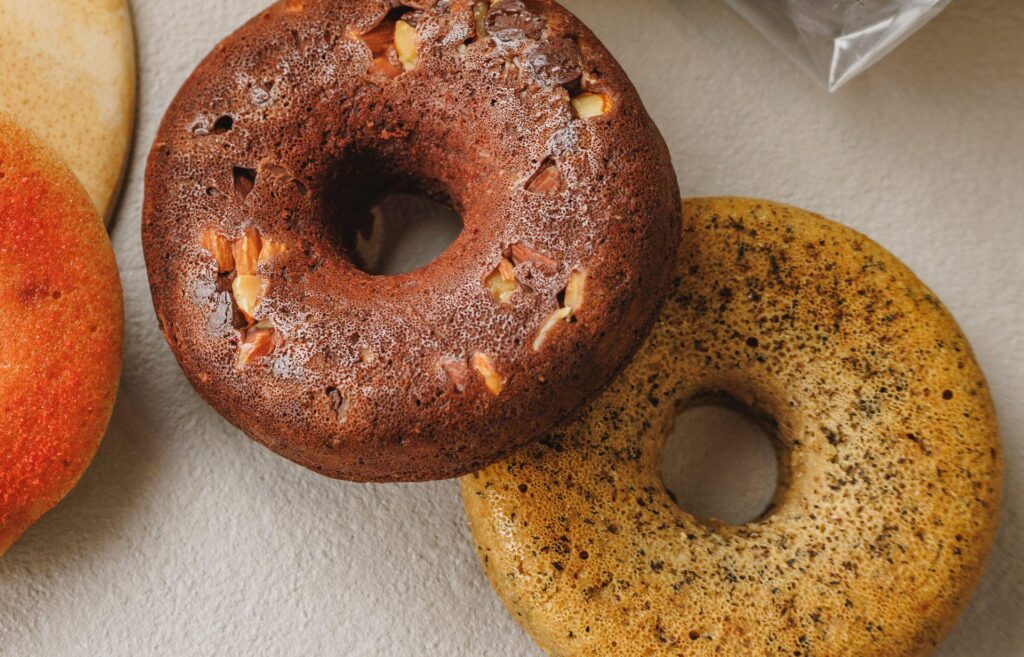
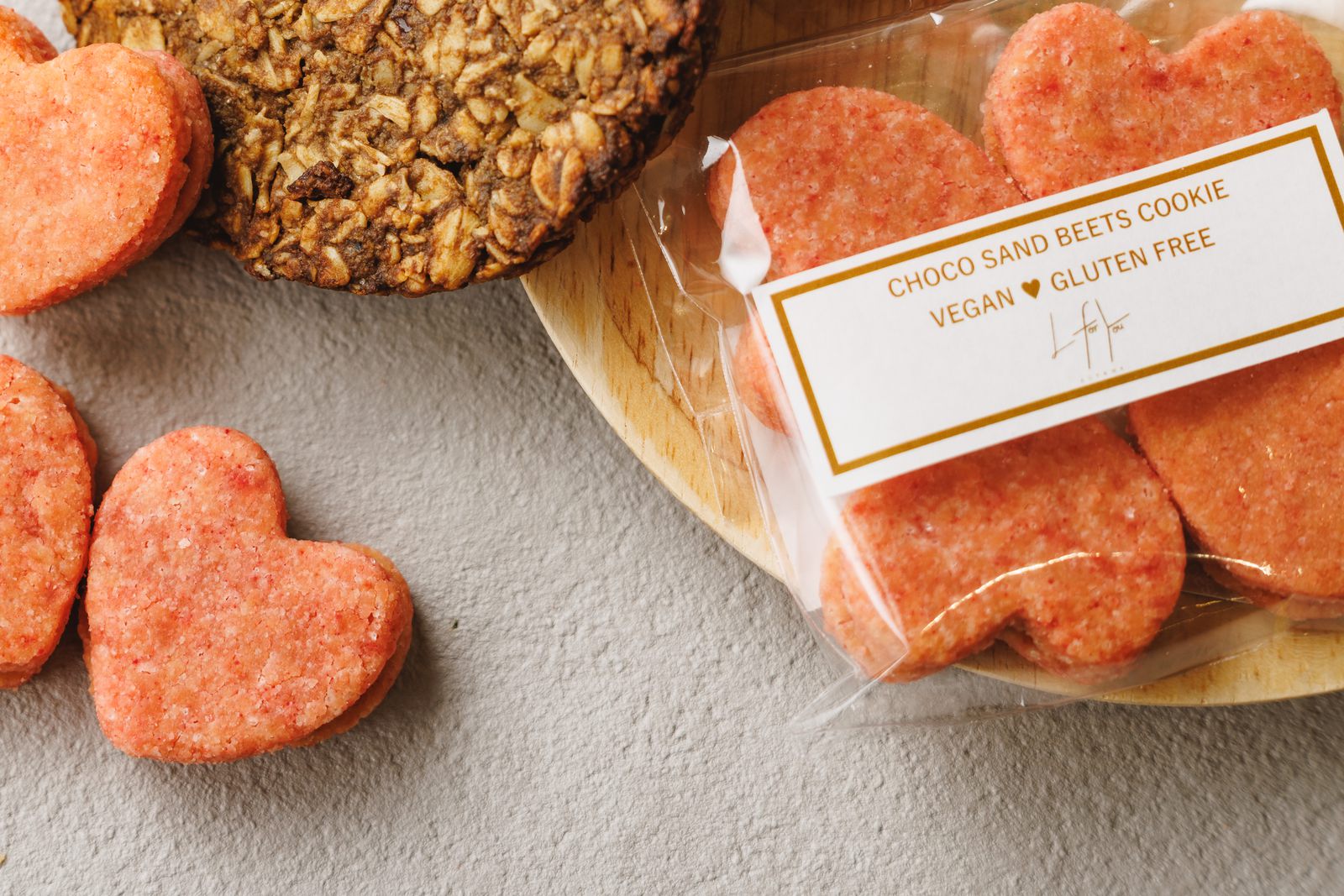
All our baked goods are vegan, made without wheat flour or refined cane sugar (white sugar), and sweetened with beet sugar, among others. The flavors made without alcohol or ingredients that contain caffeine are the strawberry donut and the chlorella and azuki bean pound cake.
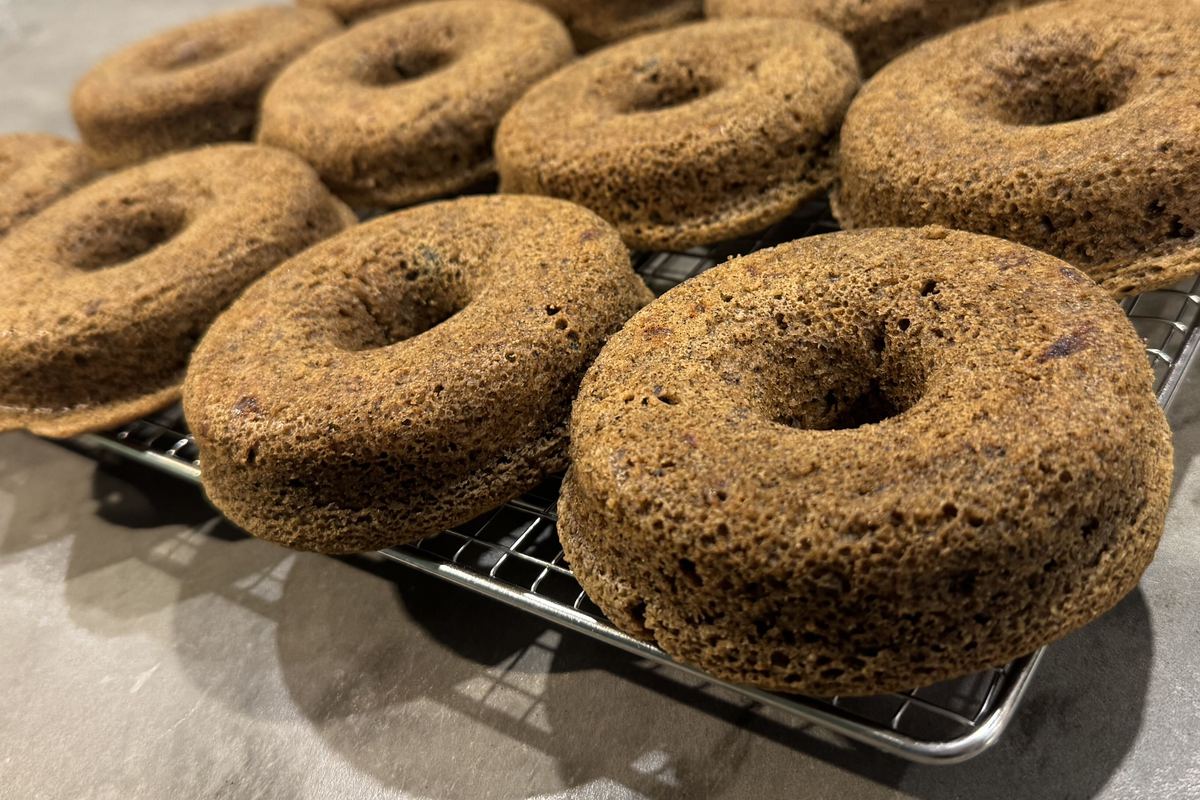
Some of our other flavors use rum, chocolate, cocoa or black tea (based on our ingredient labels as of October 25, 2026). Baked goods are always available at our shop in Minami-Aoyama, but flavors change from day to day, so please ask our staff what is on the shelf and about the ingredients of each item. A list by flavor is in the table in Giving Sweets to Someone Who Is Pregnant.
We don’t use wheat flour, and no wheat is handled in our kitchen. However, we cannot rule out trace contamination that comes from the raw materials themselves — for example, when an ingredient is grown or processed near wheat. Both the strawberry donut and the chlorella and azuki bean pound cake contain almond flour.
Frequently Asked Questions
Visit Us
| L for You AOYAMA | |
|---|---|
| Address | 1F Ikegami Bldg, 3-9-3 Minami-Aoyama, Minato-ku, Tokyo |
| Access | 6-minute walk from Omotesando Station, Exit A4 |
| Hours | Mon–Thu 11:00–20:00 / Fri 11:00–21:00 / Sat 9:30–21:00 / Sun 9:30–18:00 |
| Phone | +81-3-6459-2504 |
See access and opening hours and our menu. If you are visiting with a baby, see Bringing a Baby? Baby Food Is Welcome at Our Aoyama Cafe.