When your child avoids certain ingredients, don’t you find there is more to check at every snack time? Here is what to check, and how to let others know, at home, when you’re out and when your child is with friends.
In short: for packaged snacks in Japan, check the ingredient list and the allergen label. Sweets sold loose and desserts when eating out are not covered by the mandatory labeling, so ask the shop staff. When your child eats with friends, tell the other parent in advance what your child avoids.
- In Japan, packaged snacks must show allergens if they are used. Look at the brackets in the ingredient list, and 「(一部に〜を含む)」 (contains … in part) at the end.
- Sweets sold without a container or package (sold loose by weight, sold face to face at the counter, and so on) and desserts at cafes and restaurants are not covered by the mandatory allergen labeling. Ask the shop staff.
- When your child eats with friends, telling the other parent in advance which ingredients your child avoids makes it easier for them to prepare.
- If your child is given sweets, taking them still in the package lets you check the ingredients at home.
What to Check Depends on Where Your Child Is Eating
When your child avoids certain ingredients, what you need to watch for changes a little between eating at home, being out and eating with friends, doesn’t it? This table shows where you can find out the ingredients in each situation.
| How you can find out the ingredients | How to check | |
|---|---|---|
| Packaged snacks eaten at home (supermarkets, convenience stores, etc.) | The package shows the ingredient list and allergens | Before you buy, look at the ingredient list and any note outside the label box |
| Foods sold without a container or package (sold loose by weight, sold face to face at the counter, etc.) | Not covered by the mandatory allergen labeling | What is labeled depends on how it is sold, so ask the shop staff |
| Desserts at cafes and restaurants | Not covered by the mandatory allergen labeling (eating out) | Before you order, tell the staff and ask |
| Snacks served at a friend’s home or a get-together | The person serving them may not have checked the ingredients | Tell them in advance what your child avoids, and ask to see the package |
| Sweets given or shared | Once out of the package, the ingredients may be unknown | Take them still in the package, and check the ingredients at home |
General categories under Japan’s Food Labeling Standards (Consumer Affairs Agency).
How to read the label for each ingredient is covered in our guides to egg, milk, wheat and all three together.
For Packaged Snacks at Home, Check Three Places on the Label
In Japan, sweets packaged and sold at supermarkets and convenience stores must show allergens if they are used. Following three places on the back of the package, for each ingredient your child avoids, makes things harder to miss.
| Example of how it is written | What to look for | |
|---|---|---|
| Brackets in the ingredient list | 「…、卵白(卵を含む)、…」 (…, egg white (contains egg), …) | Whether something your child avoids is written right after an ingredient |
| Summary at the end of the ingredient list | 「…(一部に小麦・卵・乳成分を含む)」 (contains wheat, egg and milk ingredients in part) | Whether something your child avoids is in the summary |
| Note outside the label box | 「本品製造工場では〜を含む製品を生産しています」 (products containing … are made in this factory) | Whether it appears, and how it is worded, differs by product |
In principle, allergens are written ingredient by ingredient; they can also be listed together at the end. The examples are for explanation only and are not the label of any particular product.
In Japan, some items must be labeled and others are recommended to be labeled, and the items can be reviewed. Please check the latest list on the Consumer Affairs Agency’s food allergy labeling page (Japanese, opens in a new tab).
What to Tell Others When Eating with Friends or Receiving Sweets
When your child goes to play at a friend’s home, or shares snacks at the park, the other parent may not know what your child avoids. Letting them know in advance makes it easier for them to prepare too.
| What to tell or ask | What helps to have ready | |
|---|---|---|
| Before your child visits a friend’s home | Which ingredients your child avoids, and how careful you are | Your child’s own snacks (still in the package) |
| When a friend comes to your home | Whether the other child avoids anything | Keep the packages so the ingredients can be seen |
| When sharing snacks at the park, etc. | Before sharing, have a word with the other parent | Individually wrapped sweets |
| When your child is given sweets | Whether they can be handed over still in the package | Check the ingredients at home before deciding whether to eat them |
What families avoid, and how careful they are, differs from home to home. Please ask the other family how they do things, too.
How to check when giving sweets to someone with allergies is covered in Gift Ideas for Someone with Food Allergies.
L for You’s Baked Goods Are Made Without Wheat Flour, Eggs or Dairy
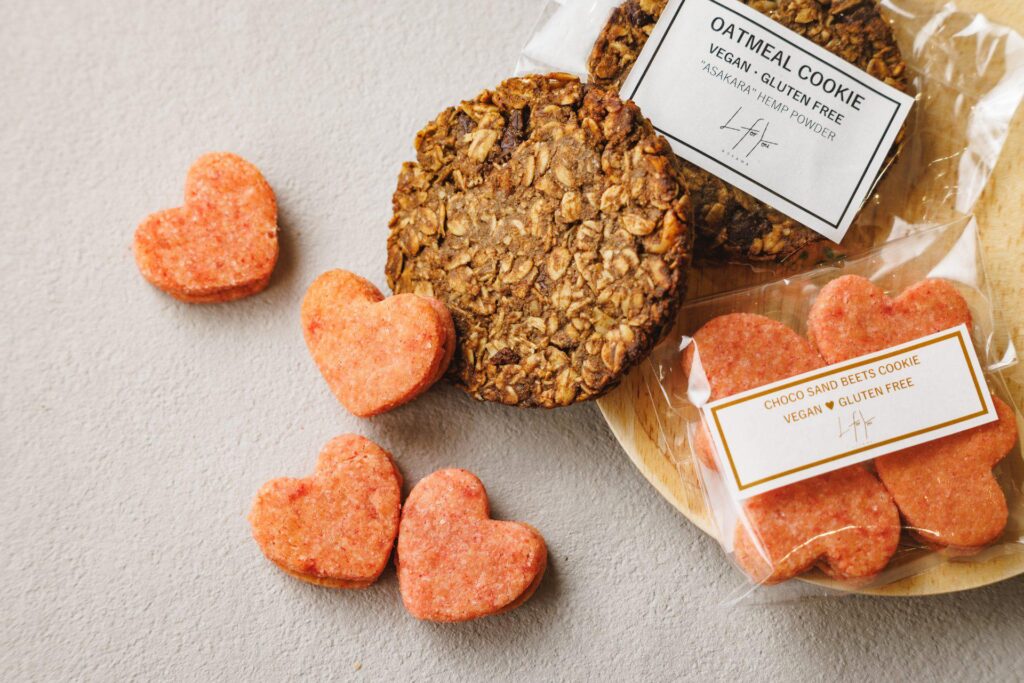
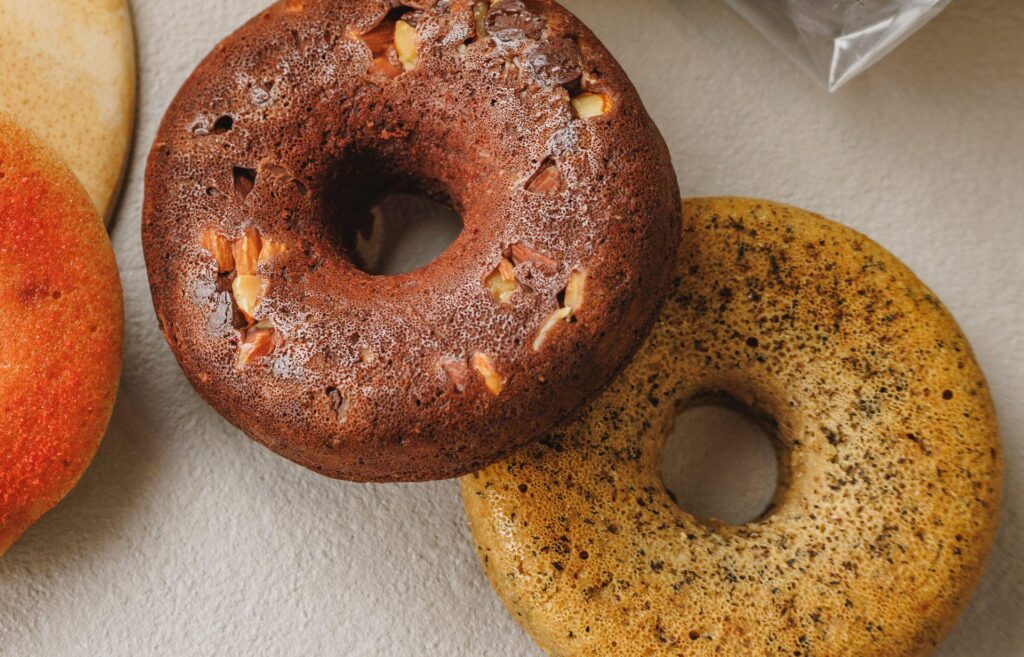
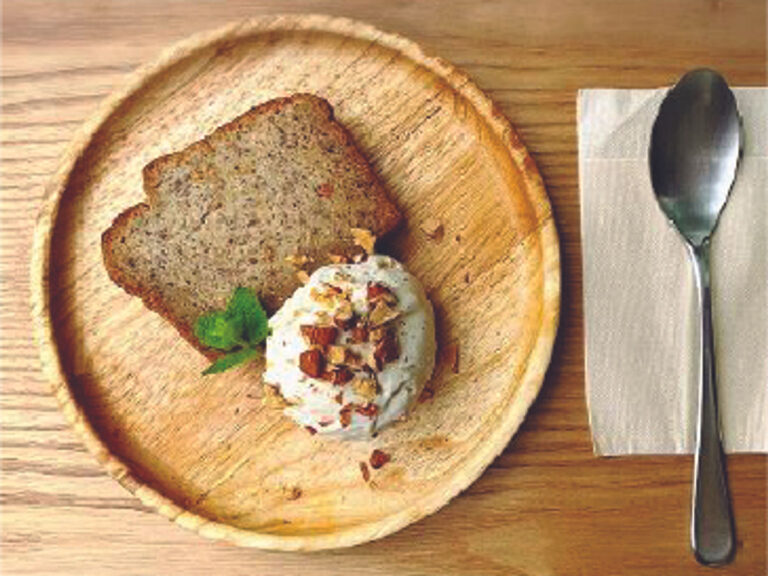
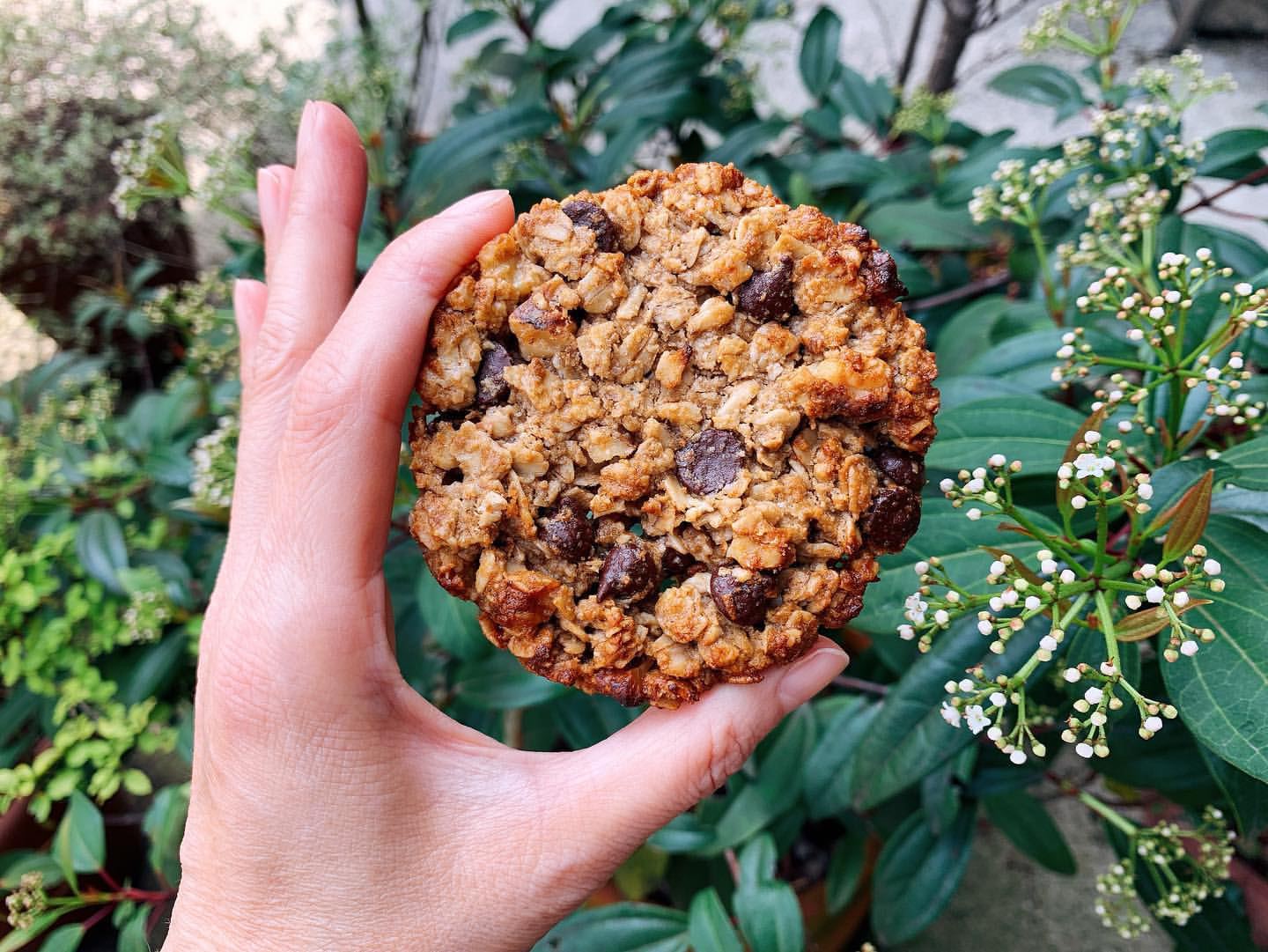
All L for You baked goods are vegan and made without wheat flour, eggs or dairy. Every flavor uses soy milk (soy), and some flavors use walnuts and almonds. The table also shows, by flavor, which ingredients contain alcohol or caffeine.
| Nuts and soy | Ingredients containing alcohol or caffeine | |
|---|---|---|
| Cookies (chocolate sandwich beet) | Almonds (almond flour), soy milk | Chocolate |
| Cookies (oatmeal chocolate chip & walnut) | Walnuts, almonds (almond flour), soy milk | Chocolate |
| Donuts (strawberry) | Almonds (almond flour), soy milk | None used |
| Donuts (chocolate chip & almond) | Almonds, almond flour, soy milk | Cocoa, chocolate |
| Donuts (Earl Grey with raisin & mulberry) | Almonds (almond flour), soy milk | Tea (Earl Grey) |
| Pound cake (chlorella & azuki bean) | Almonds (almond flour), soy milk | None used |
| Pound cake (banana) | No nuts used, soy milk | Rum |
| Pound cake (chocolate chip banana) | No nuts used, soy milk | Rum, chocolate chips |
| Pound cake (dried fig & walnut cocoa) | Walnuts, almonds (almond flour), soy milk | Rum, cocoa |
| Apple tart | Almonds (almond flour), soy milk | Rum |
In Japan, walnuts are a mandatory allergen, and almonds and soy are recommended to be labeled. Every flavor is made without wheat flour, eggs or dairy, but we cannot rule out trace contamination that comes from the raw materials themselves. Based on L for You’s ingredients as of November 2, 2026.
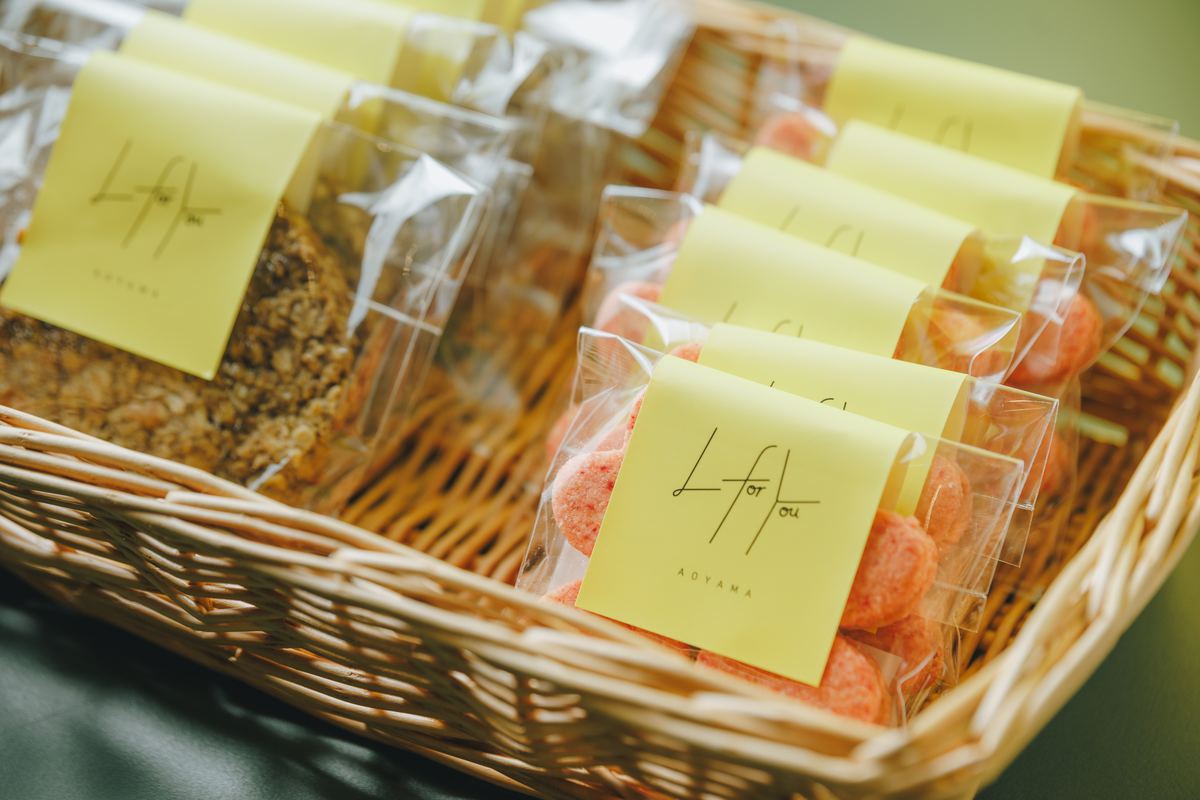
However, we cannot rule out trace contamination that comes from the raw materials themselves — for example, when an ingredient is grown or processed near wheat, eggs, dairy or nuts. If you have questions about a specific ingredient, please contact us and we will answer.
Please check the ingredients and decide, as a parent, which to choose. Our baked goods are available in our online store (opens in a new tab; ships within Japan only) and at our shop in Minami-Aoyama.
Frequently Asked Questions
Visit Us
Cookies, donuts and pound cakes are always available at our shop in Minami-Aoyama. If you have questions about ingredients or allergens, please ask our staff before you buy.
| L for You AOYAMA | |
|---|---|
| Address | 1F Ikegami Bldg, 3-9-3 Minami-Aoyama, Minato-ku, Tokyo |
| Access | 6-minute walk from Omotesando Station, Exit A4 |
| Hours | Mon–Thu 11:00–20:00 / Fri 11:00–21:00 / Sat 9:30–21:00 / Sun 9:30–18:00 |
| Phone | +81-3-6459-2504 |
See how to find us, or browse the menu if you’d like to stay for a meal.