
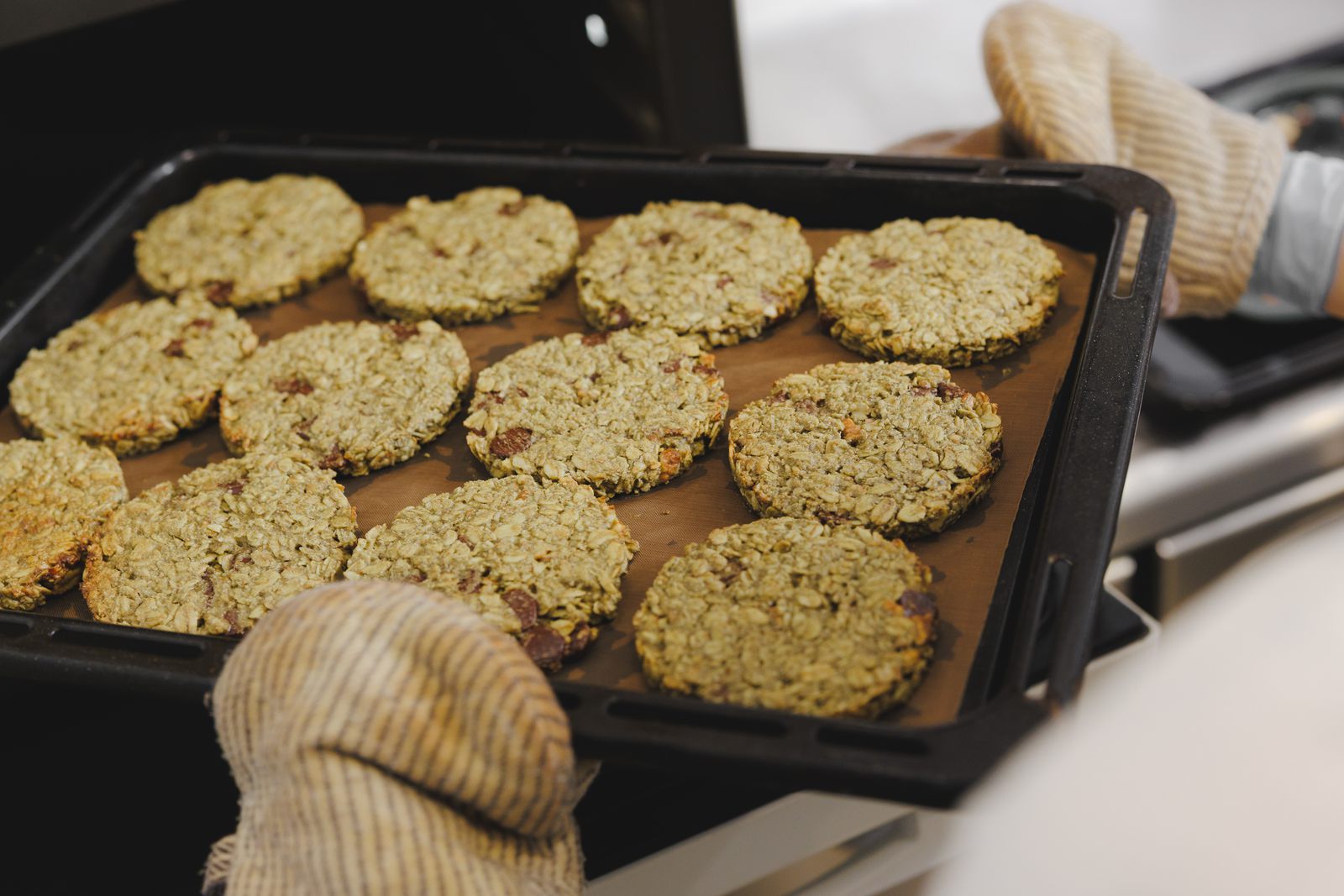

Oatmeal is known as an easy food to bring into a gluten-free diet. But have you ever wondered, “Do oats really have no gluten?” or “How is that different from oats labeled gluten-free?” Here is how oats and gluten are related.
In short: oats themselves contain no gluten. But wheat or barley can get mixed in while oats are grown, transported and processed, so ordinary oatmeal is not necessarily gluten-free. If you avoid gluten, choose oats labeled gluten-free.
- Oats themselves contain no gluten. Their protein is called avenin.
- Wheat or barley can get mixed in while oats are grown, transported and processed.
- Standards for “gluten-free”: less than 20 ppm under the US FDA, no more than 20 mg/kg under Codex. Japan has no official standard.
- When choosing, read the front of the bag together with the ingredient list and the notes on the back.
Oats Themselves Contain No Gluten
Oatmeal is oats (オーツ麦, also called えん麦) that have been rolled or cut to make them easier to eat. Gluten forms when proteins in wheat combine with water, and oats themselves do not contain it.
| Main protein | Japanese allergy labeling | |
|---|---|---|
| 小麦 wheat | Gliadin and glutenin (they form gluten when combined with water) | Must be declared |
| 大麦 barley | Hordein | Not required |
| ライ麦 rye | Secalin | Not required |
| オーツ麦・えん麦 oats | Avenin | Not required |
A gluten-free diet generally avoids wheat, barley and rye, and foods made with them.
The protein in oats is called avenin. It belongs to the same family as the proteins in wheat, barley and rye, but it is a different protein. The US Food and Drug Administration (FDA) does not count oats among the grains that contain gluten. How gluten-free differs from vegan is covered in Gluten-Free vs. Vegan.
Why Wheat Gets Mixed into Oats
Even so, ordinary oatmeal cannot simply be called gluten-free. Oats are often grown in the same areas as wheat and barley, and on the way from harvest to processing they can pass through the same machines and facilities.
| When | What can happen | |
|---|---|---|
| Growing | Grown in the same field as wheat or barley, or next to one | Grain spilled from an earlier crop sprouts and grows alongside |
| Harvesting and transport | The same harvesters, trucks and storage as wheat and other grains | Grains left in machines or truck beds get mixed in |
| Processing | Rolled or milled in the same factory or equipment as wheat and other grains | Flour left in the equipment gets mixed in |
European Union (EU) rules also note that wheat, rye or barley can get mixed into oats during harvest, transport, storage and processing.
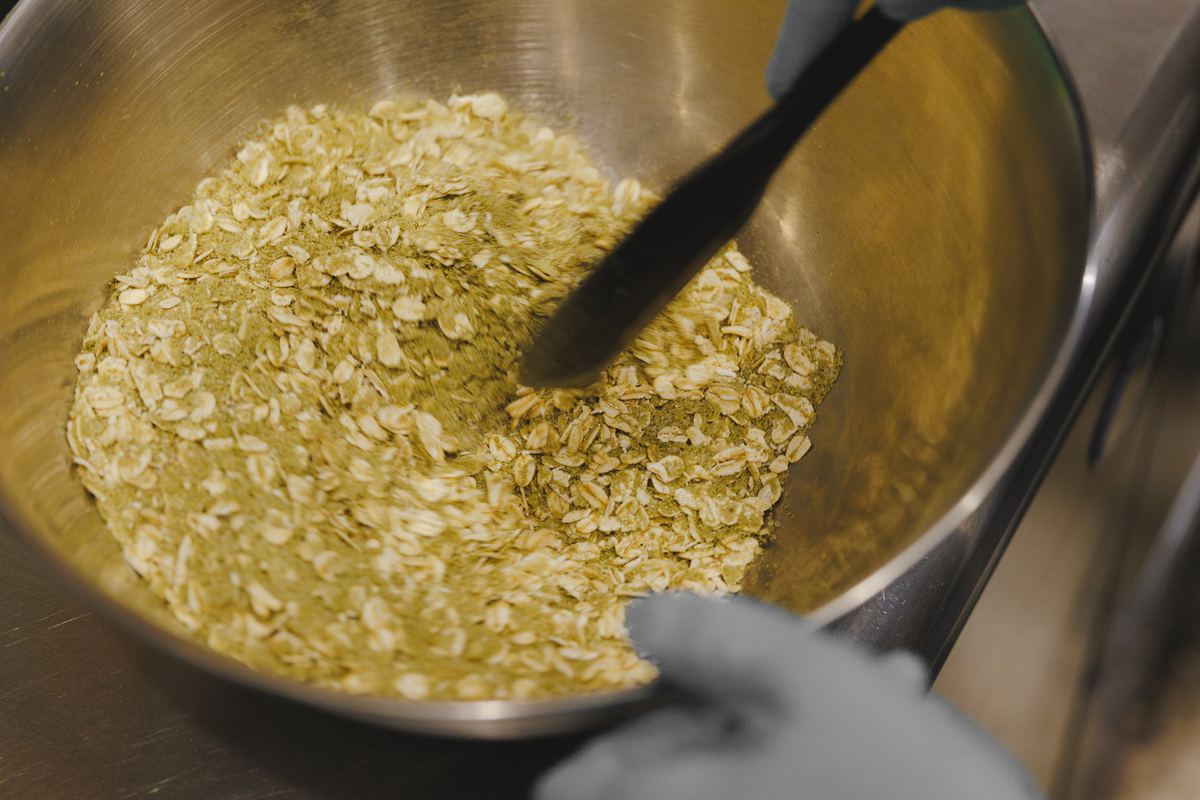
Even a tiny amount may matter to you if you avoid gluten. That is why oats that are grown, transported and processed to keep wheat and other grains out, and tested for gluten, are sold as “gluten-free.”
“Gluten-Free” Oats and Each Country’s Standard
How the “gluten-free” standard is written differs by country and by standard. The US FDA sets it at less than 20 ppm; the international food standard, Codex, at no more than 20 mg/kg. A ppm is one part per million, so 20 ppm and 20 mg/kg are the same amount.
| Gluten-free standard | How oats are treated | |
|---|---|---|
| United States (FDA) | Less than 20 ppm of gluten | Oats are not counted as a grain with gluten; below 20 ppm they can be labeled “gluten-free” |
| EU and UK | No more than 20 mg/kg of gluten | Oats grown and processed to keep wheat and other grains out, at no more than 20 mg/kg, may be used |
| International (Codex) | No more than 20 mg/kg of gluten | The international food standard that many countries’ rules are based on |
| Japan | No official standard | What the label is based on differs from product to product |
“Less than” and “no more than” follow the wording of each rule or standard. Standards can be revised.
Japan has no official standard for a “gluten-free” claim. Imported products marked GLUTEN FREE follow the standard of their home country. How to read the packaging of snacks sold in Japan is covered in Gluten-Free Snacks in Japan.
Reading a Bag of Oatmeal Labeled “Gluten-Free”
For oatmeal and oat sweets, read the front and the back of the bag together. What to look for in the ingredient list of oat sweets is covered in our guide to oatmeal sweets, and cookies in general in our guide to gluten-free cookies. For a breakfast recipe using oatmeal, see Gluten-Free Breakfast: Overnight Oats.
| What to look at | What to check | |
|---|---|---|
| Front of the bag | A グルテンフリー or GLUTEN FREE label | Which country and standard it follows; whether a figure such as 20 ppm is given |
| Ingredient list 原材料名 | What else is used besides oats | No wheat (小麦), barley (大麦), rye (ライ麦) or malt (麦芽, モルト) |
| Notes below the list | Other ingredients handled in the same factory | Whether it is made in the same factory or on the same equipment as products with wheat |
This is a general guide. For each product, the label on its own package is what counts.
A “gluten-free” label tells you about the amount of wheat and other grains mixed in. It says nothing about avenin, the protein of the oats themselves.
Coeliac UK, the UK charity for people with coeliac disease, explains that most people with coeliac disease can eat gluten-free oats, while a small number react to avenin. Whether that applies to you is something this article cannot judge.
Our Oatmeal Cookie and the Oats We Use
L for You’s oatmeal cookie is baked on a base of oats, with no rice flour. Its ingredient list begins with 有機オートミール(グルテンフリー), organic gluten-free oatmeal, and a note below it says the oats are whole oats below 20 ppm, per Western standards (as listed on October 23, 2026).
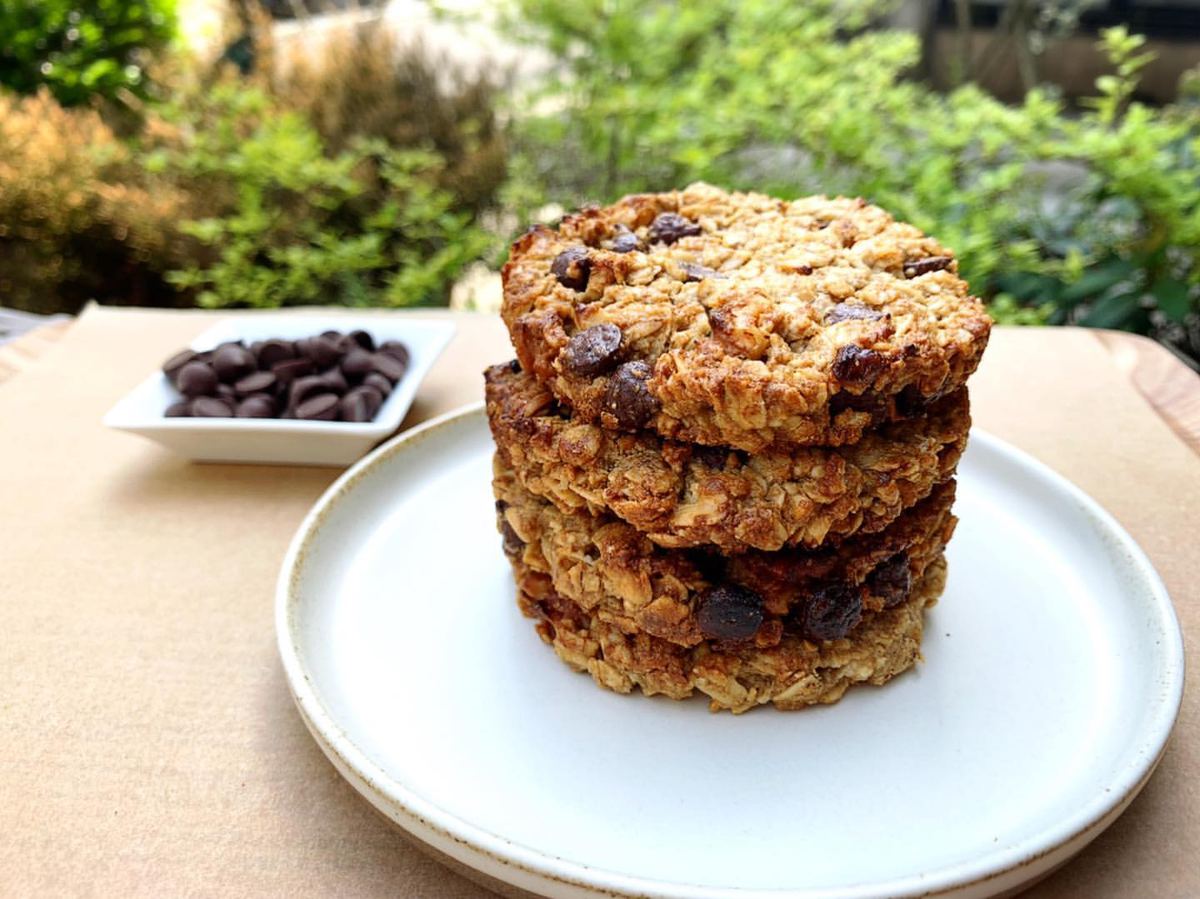
All our baked goods are vegan, and made without wheat flour or refined cane sugar. You can always buy them at our shop in Minami-Aoyama.
We don’t use wheat flour, and no wheat is handled in our kitchen. However, we cannot rule out trace contamination that comes from the raw materials themselves — for example, when an ingredient is grown or processed near wheat. The oatmeal cookie contains walnuts and almonds.
Frequently Asked Questions
Visit Us in Minami-Aoyama
L for You AOYAMA is a 6-minute walk from Omotesando Station. Our staff can tell you what goes into each dish and baked good.
| L for You AOYAMA | |
|---|---|
| Address | 1F Ikegami Bldg, 3-9-3 Minami-Aoyama, Minato-ku, Tokyo |
| Access | 6-minute walk from Omotesando Station, Exit A4 |
| Hours | Mon–Thu 11:00–20:00 / Fri 11:00–21:00 / Sat 9:30–21:00 / Sun 9:30–18:00 |
| Phone | +81-3-6459-2504 |
See access and opening hours and our menu before you visit.