Sweets during pregnancy can be sorted by two questions: what is in them, and where they were made. Here is how to read the ingredient list and the production environment, and how to think about how much to eat and when.
In short: look at three things — the ingredients, where it was made, and how much and when. If the label doesn’t tell you, asking the shop is the surest way, and if anything concerns you, talk to your doctor.
- Ingredient lists are ordered from the largest amount down. The first two or three items tell you what the sweet is made of.
- Liquor is used not only in cakes but also in baked goods and dried fruit.
- Caffeine is also found in chocolate, cocoa, black tea and matcha.
- “Wheat-free” (小麦不使用) is about the ingredients. Traces getting in on the production lines of bought-in ingredients are a separate matter.
What Is There to Think About With Sweets During Pregnancy?
Once you learn you are pregnant, you may suddenly find yourself thinking about everything you eat. Many people do. At our shop, too, we are asked more and more often, “Is this okay to eat?” Still, deciding never to eat sweets at all isn’t very realistic. We often hear that during morning sickness, something sweet was the only thing that went down. If holding back becomes a burden in itself, isn’t that missing the point?
Narrowing down what you look at makes choosing easier. At the shop, we talk about three things:
- Ingredients
- The production environment — where and how it was made
- How much and when
Everything else can wait for now. Trying to think about everything at once usually means you can’t choose anything. Below, we go through how to look at each one, and touch on the parts that need a professional’s judgment at the end.
How to Read the Ingredient List
In Japan, ingredients have to be listed from the largest amount down. So the first two or three items tell you roughly what a sweet is made of. If sugar comes first, it is a sugar confection; if flour comes first, it is a baked good.
Turned around, the items near the end are used in small amounts. If an ingredient you are wondering about comes near the end, you may not need to worry as much. Allergens are different: for anything you react to even in trace amounts, the amount can’t be your guide.
Liquor Is Often Used in Baked Goods, Too
People tend to think only cakes contain alcohol, but rum or kirsch is sometimes used for aroma in pound cakes, financiers and tart bases. Dried fruit is often soaked in liquor, too.
How much of the alcohol cooks off depends on the baking temperature and time and on how thick the batter is. You can’t say across the board either “it’s baked, so it’s fine” or “some is left, so it’s dangerous.” If you are concerned, check the label or ask the shop.
Caffeine Is in Chocolate, Cocoa and Tea, Too
Caffeine brings coffee to mind, but baked goods made with chocolate, cocoa, black tea or matcha contain it too. The amount in one sweet isn’t large, but it adds up with what you drink.
It is realistic to think in terms of the total for the day. If you are having black tea in the afternoon, pick a sweet without caffeine — small adjustments like that are a practical way to keep track.
How to Check the Production Environment
This is the part a label alone can’t tell you. Even when something isn’t in the ingredient list, traces can get in on the production lines of the ingredients a shop buys in. An ingredient may itself contain no wheat, while the factory that makes it also handles wheat. Whether something is made on a dedicated line doesn’t appear on the label. Depending on how severe an allergy is, you may need to check this far: “wheat-free” can describe the ingredients rather than the production environment.
When the label doesn’t tell you, asking the shop is the surest way. You can also look at it the other way round: choose a shop that can answer right away. A shop that knows how it makes its own products should be able to answer. If all you get is a vague reply, that is information too.
How Much and When
The third is how much and when. There is no clear standard here as there is for ingredients, so this is a part you can decide by how you feel. We often hear that eating a little at a time, spread out over the day, felt easier than eating a lot at once — perhaps especially during morning sickness. Others say a small dessert after a meal doesn’t bother them.
There is no set way, so I don’t think you need to force a single rule. How you feel changes from day to day at this time, and going with how you feel that day is easier to keep up.
At L for You

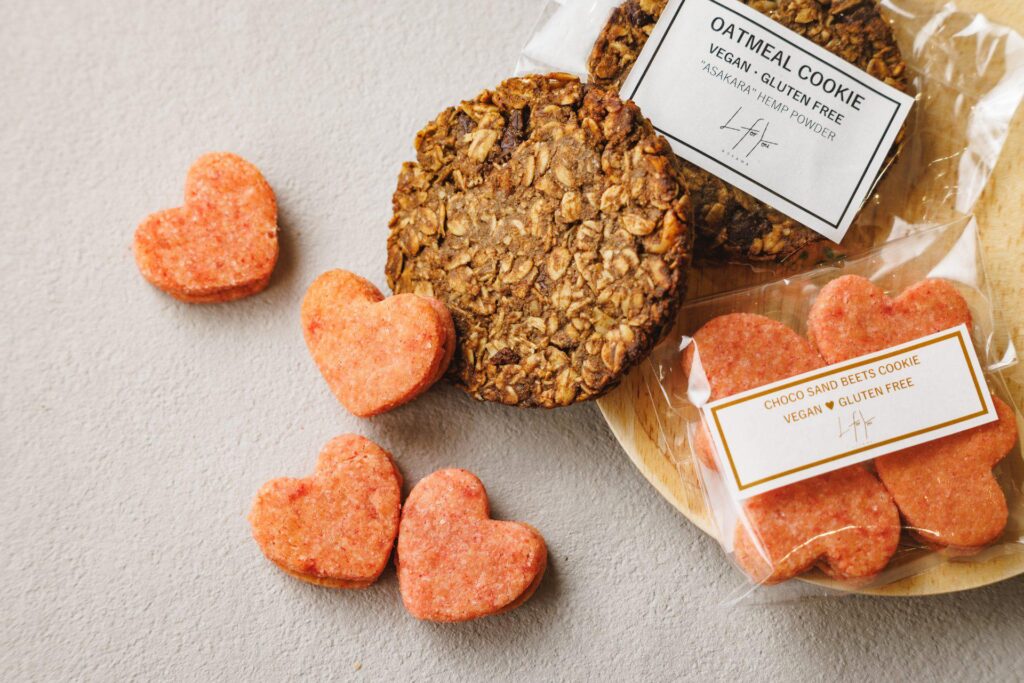
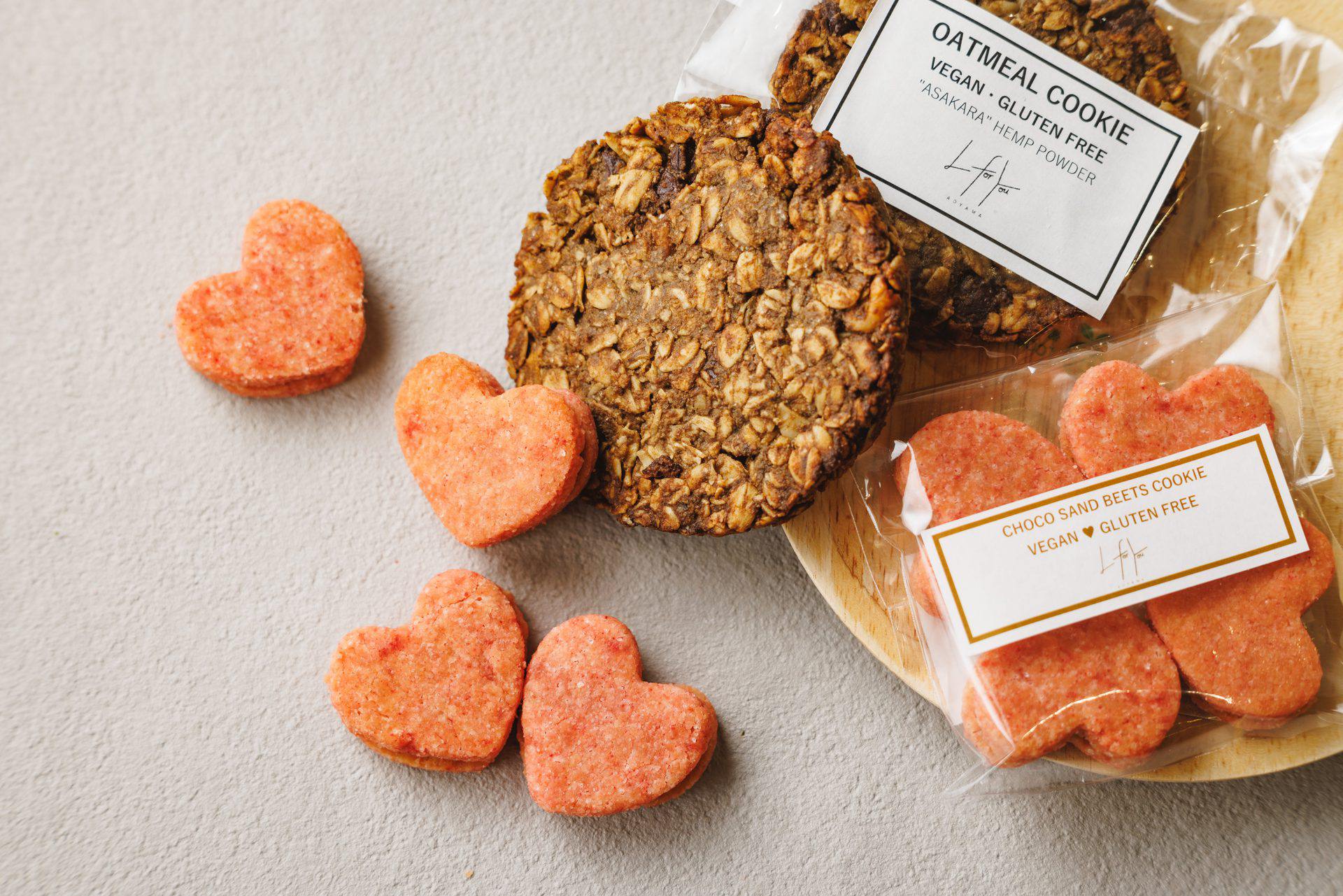
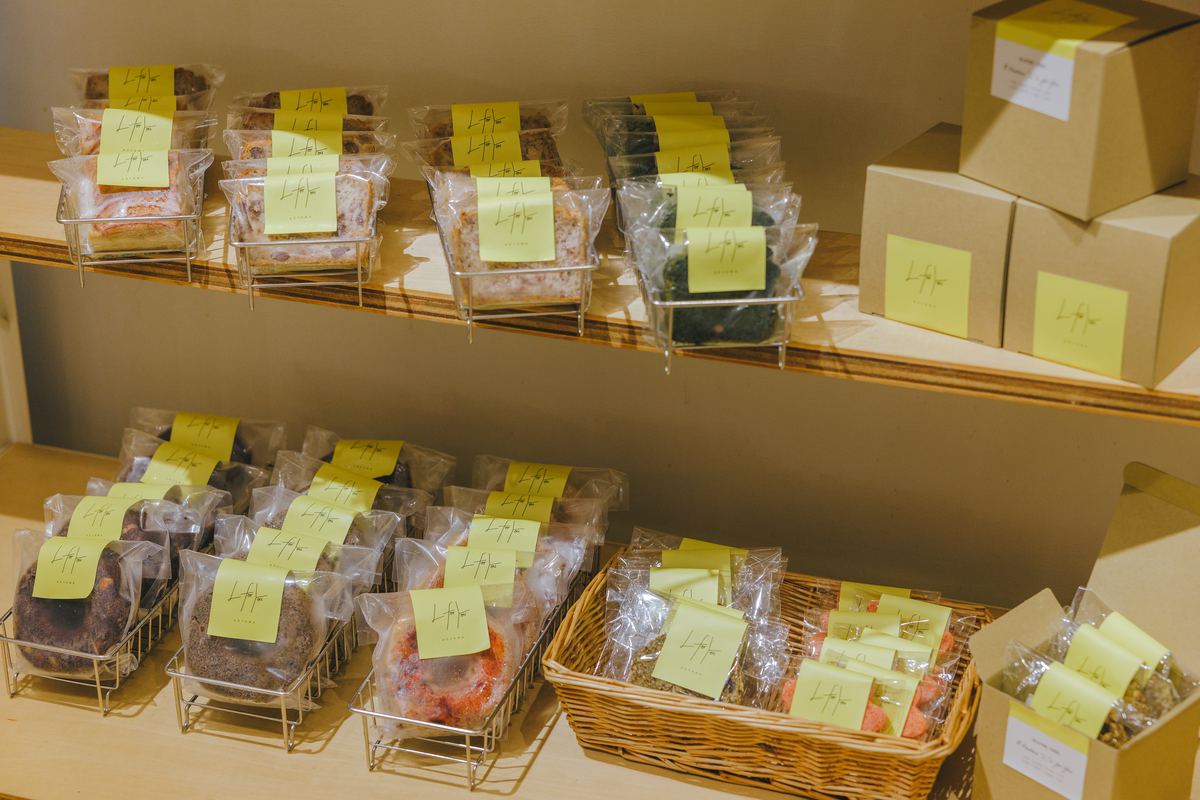
Finally, here is how it works at our own shop. We won’t tell you our sweets are “safe” for pregnancy. We tell you the ingredients and how they are made as they are, and leave the decision to you and your doctor. All our baked goods are vegan and made without wheat flour. We use no wheat flour, eggs or dairy, and no white sugar (refined cane sugar).
There are also things we want to be upfront about. As of October 26, 2026:
- Nuts: some items contain nuts such as walnuts and almonds.
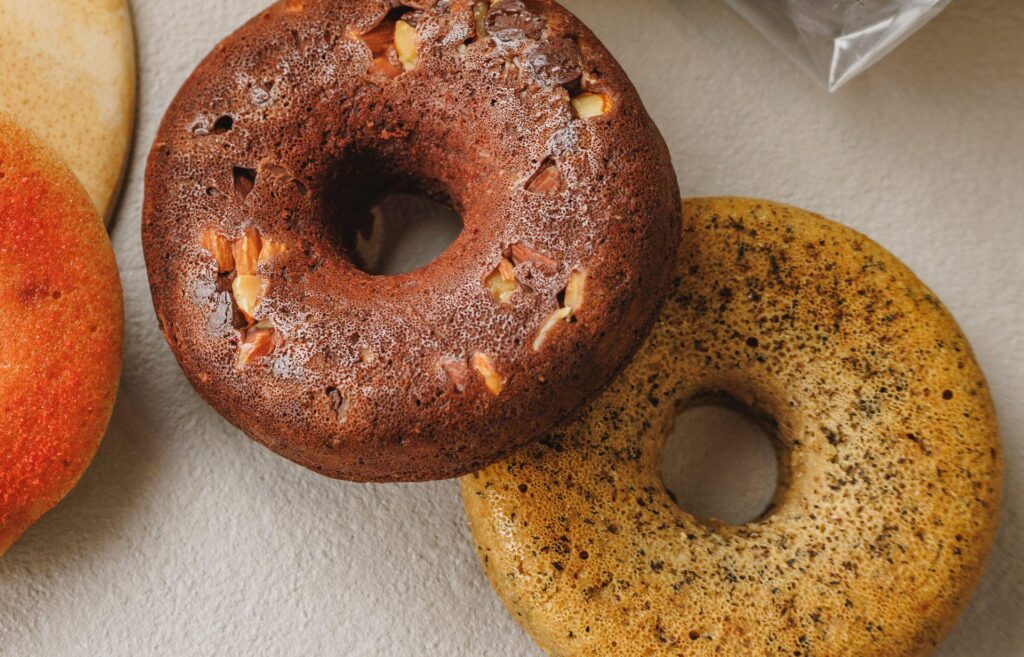
- Alcohol: three pound cakes (banana, chocolate chip banana, and dried fig and walnut cocoa) and our apple tart use rum. Our donuts and cookies use no rum.
- Ingredients that contain caffeine: both cookies use chocolate; the chocolate & almond donut uses cocoa and chocolate; the Earl Grey donut uses black tea; the chocolate chip banana pound cake uses chocolate; the dried fig and walnut cocoa pound cake uses cocoa.
We don’t use wheat flour, and no wheat is handled in our kitchen. However, we cannot rule out trace contamination that comes from the raw materials themselves — for example, when an ingredient is grown or processed near wheat.
Our staff can tell you what is in each item at the shop. If anything concerns you, please ask. We would like to think there is nothing about how we make them that we would hesitate to explain.
Frequently Asked Questions
Visit Us in Minami-Aoyama
At L for You AOYAMA, a 6-minute walk from Omotesando Station, you can buy our cookies, donuts and pound cakes, and our staff can tell you the ingredients of each one. The flavors on the shelf change from day to day.
| L for You AOYAMA | |
|---|---|
| Address | 1F Ikegami Bldg, 3-9-3 Minami-Aoyama, Minato-ku, Tokyo |
| Access | 6-minute walk from Omotesando Station, Exit A4 |
| Hours | Mon–Thu 11:00–20:00 / Fri 11:00–21:00 / Sat 9:30–21:00 / Sun 9:30–18:00 |
| Phone | +81-3-6459-2504 |
See access and opening hours and our menu before you visit.
Standards reviewed by AFRODE CLINIC (ingredient selection and recipe design).