

In Japan, when you receive a gift celebrating a birth, a wedding, a recovery or a new home, it is customary to send a return gift called uchiiwai (内祝い). This guide is for anyone looking for sweets to send as one: the key points of uchiiwai etiquette, and how to choose sweets when you don’t know the recipient’s tastes or dietary restrictions.
The usual guide is to return about half the value of the gift you received, within about a month. When you don’t know what the recipient likes or avoids, sweets that keep well, are individually wrapped and have an ingredient list you can check are the easiest to choose.
- Uchiiwai is a return for a celebration gift you received. About half its value (半返し, han-gaeshi) is the usual guide.
- Send it within about a month of receiving the gift. The wording on the noshi and the cord (水引, mizuhiki) change with the kind of celebration.
- For someone whose tastes or dietary restrictions you don’t know, check three things: how long it keeps, individual wrapping and the ingredient list.
- If the sweets arrive frozen, it is kind to think about the recipient’s freezer and a day that is easy for them to receive the delivery.
Uchiiwai: A Return Gift for a Celebration
Uchiiwai was originally a gift for sharing a family celebration with the people around you. Today it is usually sent as a return for gifts received for a birth, a wedding, a recovery from illness or a new home. When to send it and how to write the noshi (のし), the paper wrapper on a formal gift, depend on the kind of celebration.
| When to send | Noshi wording (<span lang="ja">表書き</span>) and cord | |
|---|---|---|
| Birth 出産内祝い | By about one month after the birth (around the first shrine visit, お宮参り) | 「内祝」 or 「出産内祝」. Red-and-white cord tied in a bow (蝶結び). The name is the baby's |
| Wedding 結婚内祝い | After the ceremony, or within one month of receiving the gift | 「内祝」 or 「寿」. Red-and-white cord tied in a fixed knot (結び切り). The couple's names together, or the new family name |
| Recovery 快気内祝い | About 10 days to one month after leaving hospital or recovering | 「快気祝」 or 「快気内祝」. Red-and-white fixed knot |
| New home 新築内祝い | About one to two months after moving in | 「内祝」 or 「新築内祝」. Red-and-white bow |
These are general guides. Customs differ by region and family, so if you're unsure, ask family members or someone close to you.
Sweets are a popular choice for uchiiwai because they are kiemono (消えもの), things that are used up once eaten. For a recovery gift in particular, something that doesn’t stay behind is considered best.
How Much to Spend: About Half (半返し)
The usual guide for uchiiwai is about half the value of the gift you received (han-gaeshi). When a senior person or a relative has given a generous gift, about a third is also considered fine.
| Half (han-gaeshi) | One third | |
|---|---|---|
| ¥10,000 | About ¥5,000 | About ¥3,000 |
| ¥5,000 | About ¥2,500 | About ¥1,500 |
| ¥3,000 | About ¥1,500 | About ¥1,000 |
One third is the guide when a senior person or a relative has given a generous gift.
When a gift came from several people together, one way is to divide the total by the number of people and return about half of each share.
When You Don’t Know Their Tastes or Dietary Needs, Check Three Things
With uchiiwai, you often choose without knowing the family’s tastes or what foods they avoid. In that case, checking three things — how long it keeps, individual wrapping and the ingredient list — helps you choose something the recipient won’t have to worry about.
| Why check it | Where to check | |
|---|---|---|
| How long it keeps | They may not eat it as soon as it arrives | The best-before date and how to store it (room temperature or frozen) |
| Individual wrapping | Easy for a family to share, or to eat a little at a time | The product description and photos |
| Ingredient list | You don't know whether they avoid wheat, eggs, dairy or other foods | The ingredient names and the allergy labeling |

If you want to give “healthy” sweets, it helps to put that into words as what the sweets are made without, and then check it on the ingredient list.
Sending Sweets That Arrive Frozen
Uchiiwai is often delivered to the recipient’s home. If you choose sweets that arrive frozen, it is kind to think about whether they will fit in the recipient’s freezer, and which day is easy for them to receive the delivery.
For someone who is often out, or whose delivery day is hard to predict, sweets that arrive at room temperature may be easier to receive.
Choosing L for You Baked Goods for Uchiiwai
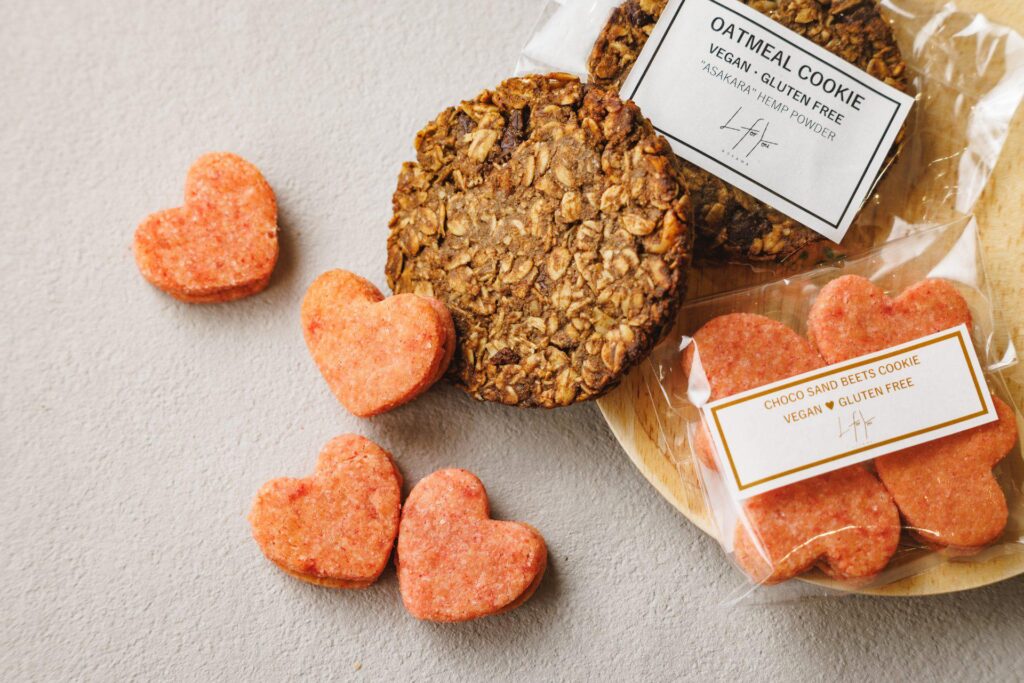
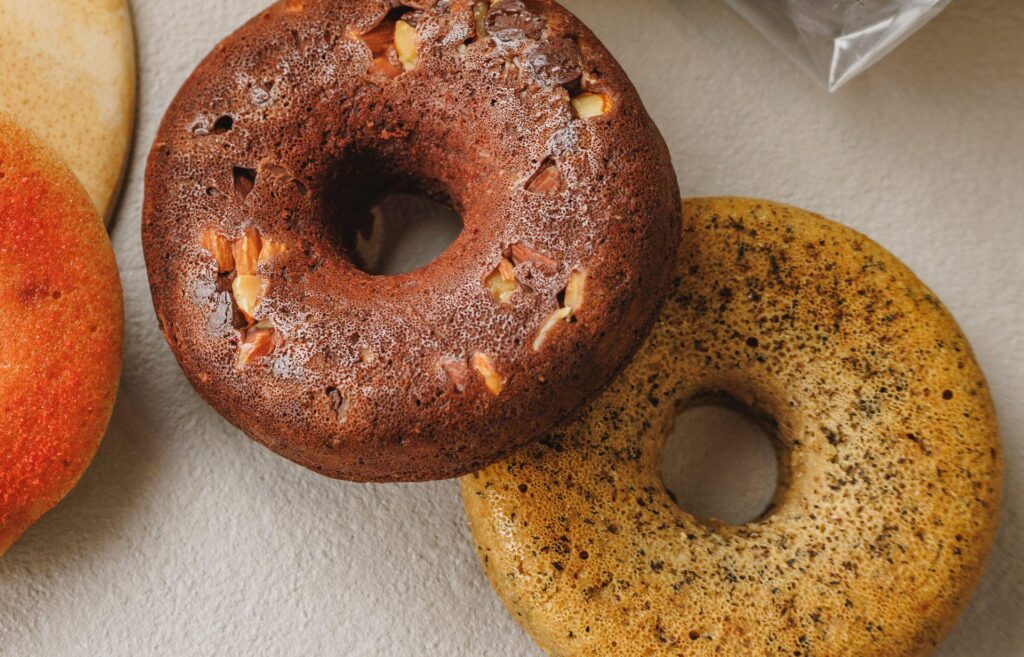
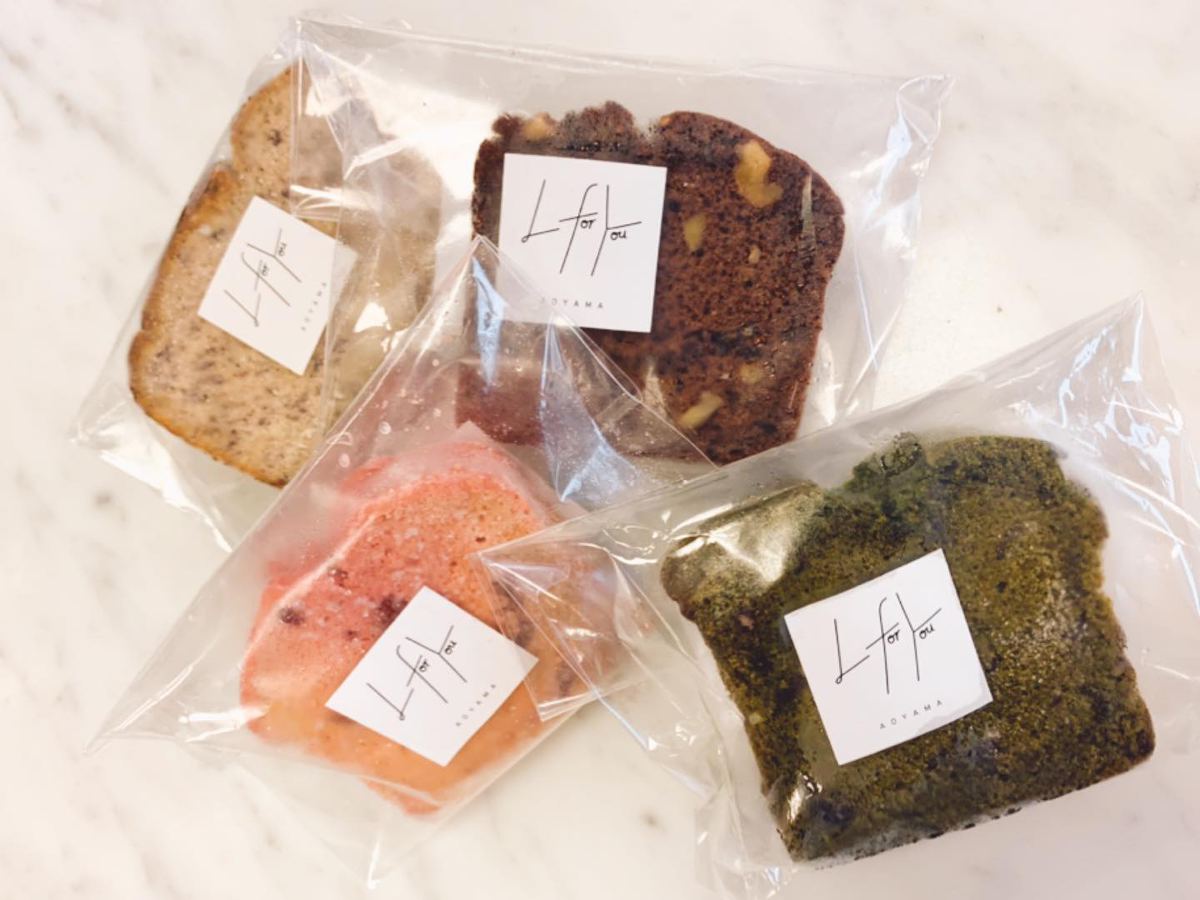
All our baked goods are vegan and made without wheat flour, eggs, dairy or refined cane sugar (white sugar). We sweeten them with beet sugar, among others. They are an easy choice when you don’t know a family’s food preferences.
| How long it keeps | |
|---|---|
| Cookies | About 2 months at room temperature |
| Donuts | Please ask our staff |
| Pound cakes | Please ask our staff |
How long they keep differs by product.
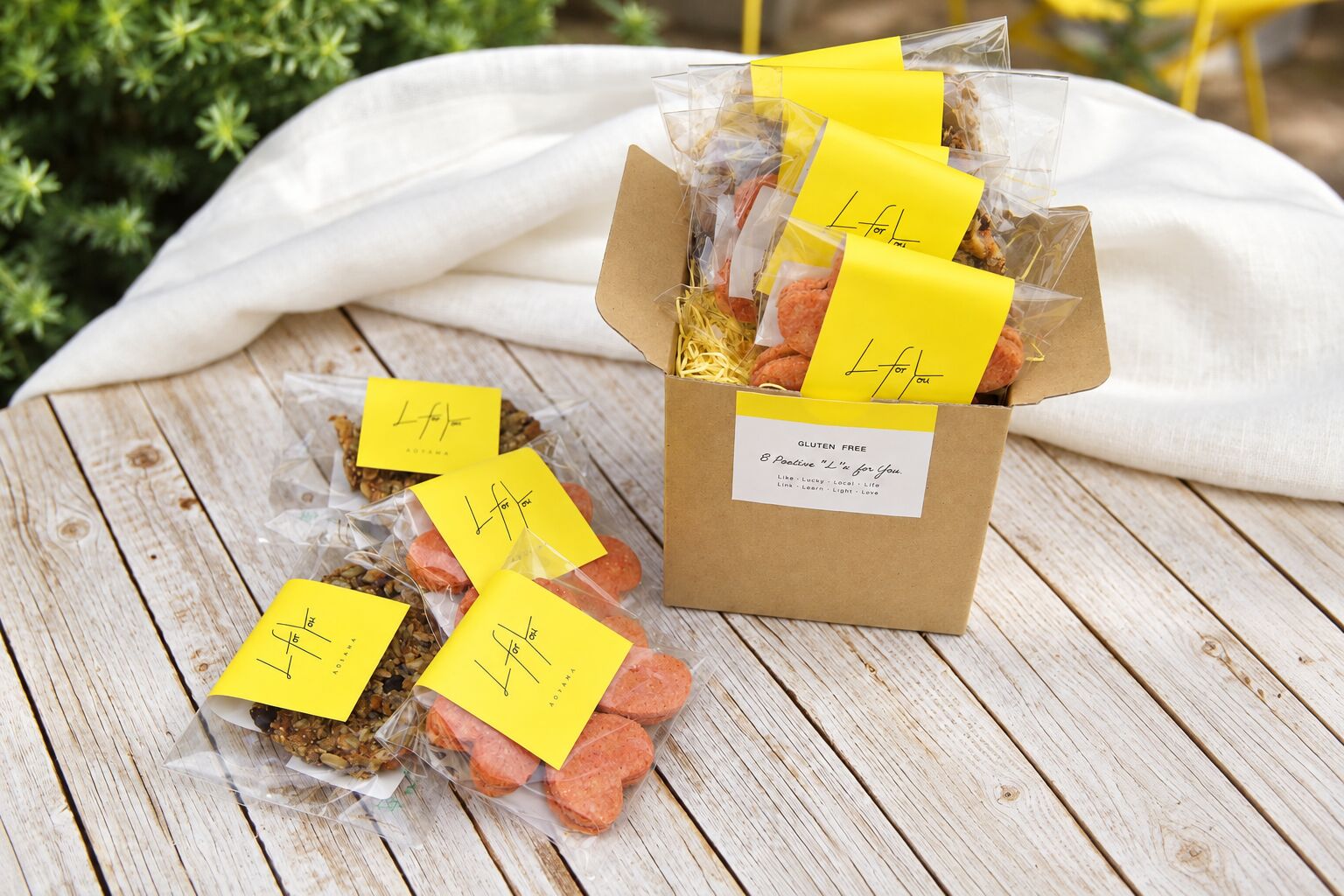
Cookies, donuts and pound cakes are always available at our shop in Minami-Aoyama, each in its own bag. Flavors change from day to day. We can gift-wrap your sweets at the shop — just let our staff know when you pay. Our online store (opens in a new tab) also has a “Gift Box”: a box and seal set you pack yourself. Ships within Japan only.
We don’t use wheat flour, and no wheat is handled in our kitchen. However, we cannot rule out trace contamination that comes from the raw materials themselves — for example, when an ingredient is grown or processed near wheat. Some items contain nuts such as walnuts and almonds.
Gift box and sets
-
 Gluten-free cookies, set of 6
-
 Gluten-free donuts, set of 3
-
 Rice flour pound cakes, set of 4
-
 Gift box (fill it yourself)A gift box with a seal. You pack the items yourself.
Ships within Japan only (frozen delivery for some items).
Some items contain nuts such as walnuts and almonds. We don’t use wheat flour, and no wheat is handled in our kitchen. However, we cannot rule out trace contamination that comes from the raw materials themselves — for example, when an ingredient is grown or processed near wheat.
Frequently Asked Questions
Visit Us
| L for You AOYAMA | |
|---|---|
| Address | 1F Ikegami Bldg, 3-9-3 Minami-Aoyama, Minato-ku, Tokyo |
| Access | 6-minute walk from Omotesando Station, Exit A4 |
| Hours | Mon–Thu 11:00–20:00 / Fri 11:00–21:00 / Sat 9:30–21:00 / Sun 9:30–18:00 |
| Phone | +81-3-6459-2504 |
See access and opening hours and our menu, or read Gluten-Free Souvenirs in Tokyo for sweets to take home.