Looking for additive-free (無添加, mutenka) snacks at a convenience store in Japan, have you found that the words on the front of the package don’t tell you what has actually been left out? So you can check quickly while standing at the shelf, here are the four places to look on the package, in order.
In short: when looking for additive-free snacks at a convenience store, read the ingredient list (原材料名, genzairyōmei) on the back rather than the word “additive-free” on the front. In most cases, food additives come after the slash (/), and ingredients are listed from the largest amount down. Finally, check the allergen information and any cautionary note.
- “Additive-free” (無添加) and “no ○○” (○○不使用) labels tell you that something is not used. What is not used is something to check in the ingredient list on the back.
- In most cases, food additives come after the slash (/) in the ingredient list. Some products separate them with a line break or a separate “additives” (添加物) box instead.
- Ingredients are listed from the largest amount by weight down, so the first two or three tell you what the snack is mainly made of.
- Allergens are shown in brackets in the ingredient list or at the end of it. Whether a product carries a “made in the same factory” note differs from product to product.
The Order to Check, Standing at the Convenience Store Shelf
When you turn a snack over at the shelf, the small print can make it hard to know where to start, can’t it? If you narrow it down to four places and check them in order, you can choose in a short time.
| Where it is | What it tells you | |
|---|---|---|
| 1. Words on the front | The front of the package | That something is not used (what it is, you check on the back) |
| 2. The slash (/) | The ingredient list (原材料名) on the back | Where the food additives start |
| 3. The order | The ingredient list (原材料名) on the back | What is used the most |
| 4. Allergens and cautionary notes | Brackets in the ingredient list, or outside the box | Whether it contains ingredients that can cause allergies |
Nutrition facts such as energy and fat are in a separate box from the ingredient list. For how to read calories, see Are There Sweets That Won’t Make You Gain Weight?, and for what to look at on oatmeal snacks, see How to Choose Oatmeal Snacks.
1. “Additive-Free” (無添加) and “No ○○” (○○不使用) Labels Tell You What Is Not Used
Words on the front of the package such as “additive-free” (無添加) or “no preservatives” (保存料不使用) tell you that something has not been used. The guidelines on “not used” labels that Japan’s Consumer Affairs Agency issued in 2022 are explained in Choosing Snacks for Kids.
| What it tells you | Where to check on the back | |
|---|---|---|
| Just 「無添加」 (additive-free) | This word alone doesn’t tell you what has not been used | After the slash (/) in the ingredient list |
| 「保存料不使用」 (no preservatives) and similar | That the named kind of food additive is not used | Other food additives come after the slash (/) |
| 「砂糖不使用」 (no sugar) and similar | A label about what sweetens it | What sweetens it, in the ingredient list |
| 「グルテンフリー」 (gluten-free), 「ヴィーガン」 (vegan) | A label about ingredients that are not used | The ingredient list and allergens |
| 「ギルトフリー」 (guilt-free), 「ヘルシー」 (healthy) | Words with no set standard | The ingredient list and nutrition facts |
Use the words on the front as a reason to read the label on the back.
Use the words on the front as a starting point, and check what is inside on the ingredient list on the back. What words such as “guilt-free” mean is set out in What Are “Guilt-Free” Sweets?
2. In the Ingredient List (原材料名), Food Additives Come After the Slash (/)
On the back of a packaged snack is a box that brings together the ingredient list (原材料名), net contents, best-before date and so on. The rules say ingredients and food additives must be listed separately, and many products separate them with a slash (/).
| How it is written | Where the food additives are | |
|---|---|---|
| With a symbol | 「…、食塩/膨張剤、香料」 (…, salt / leavening agent, flavoring) | After the slash (/) |
| With a line break | A new line starts after the ingredients | From where the new line starts |
| With a separate box | An 「添加物」 (additives) box apart from 「原材料名」 (ingredients) | In the 「添加物」 box |
How they are separated differs by product. Food additives are also listed from the largest amount down.
Some food additives do not have to be listed even when they are used — for example, those removed during processing. How to read before and after the slash is also covered in Choosing Snacks for Kids.
3. Ingredients Are Listed From the Largest Amount Down
The ingredient list starts with the ingredient that makes up the largest share by weight. Looking at the first two or three tells you what the snack is mainly made of.
| Example | How to read it | |
|---|---|---|
| First | 「小麦粉、砂糖、植物油脂、…」 (wheat flour, sugar, vegetable oil, …) | The ingredient used the most is wheat flour |
| Second and third | 砂糖 (sugar), 植物油脂 (vegetable oil) | Whether there is a lot of sweetener or oil |
| In brackets | 「チョコレート(砂糖、カカオマス、…)」 (chocolate (sugar, cacao mass, …)) | What an ingredient made of several things contains. Inside the brackets, too, the largest amount comes first |
| Toward the end | 「…、食塩」 (…, salt) | Ingredients used in small amounts |
The example is for explanation only and is not the label of any particular product.
The closer a sweetener such as sugar is to the front, the more of it is used compared with the other ingredients. The difference between labels such as “no sugar” (砂糖不使用) and “non-sugar” (ノンシュガー) is set out in Sweets Without Refined Sugar.
4. Allergen Labels (アレルゲン) and “Made in the Same Factory” Notes
Of the ingredients that can cause allergies, wheat, egg, milk, peanuts, walnuts and some others must be labeled. They are shown in brackets in the ingredient list or at the end of it, written like (一部に小麦・乳成分を含む) — “contains wheat and milk ingredients in part.”
| Where it is written | How to read it | |
|---|---|---|
| Ingredient by ingredient | In brackets right after each ingredient | Which ingredient contains it |
| All together | At the end of the ingredient list: 「(一部に〜を含む)」 (contains … in part) | All the allergens it contains, in one place |
| Cautionary note | Outside the box, for example 「本品製造工場では〜を含む製品を製造しています」 (products containing … are made in the factory that makes this product) | A note that the same factory or equipment handles them. Whether it appears, and how it is worded, differs by product |
Some items must be labeled and others are recommended to be labeled. The items can be reviewed, so please check the latest information from Japan’s Consumer Affairs Agency.
Foods cooked in the store and sold on the spot, and foods sold loose, follow different labeling rules from packaged snacks, and may not show an ingredient list. If you are concerned, please ask the staff at the store. For how to read the label when you want to avoid wheat, see Gluten-Free Snacks in Japan.
You Can Check the Ingredients of L for You Baked Goods on Each Product Page
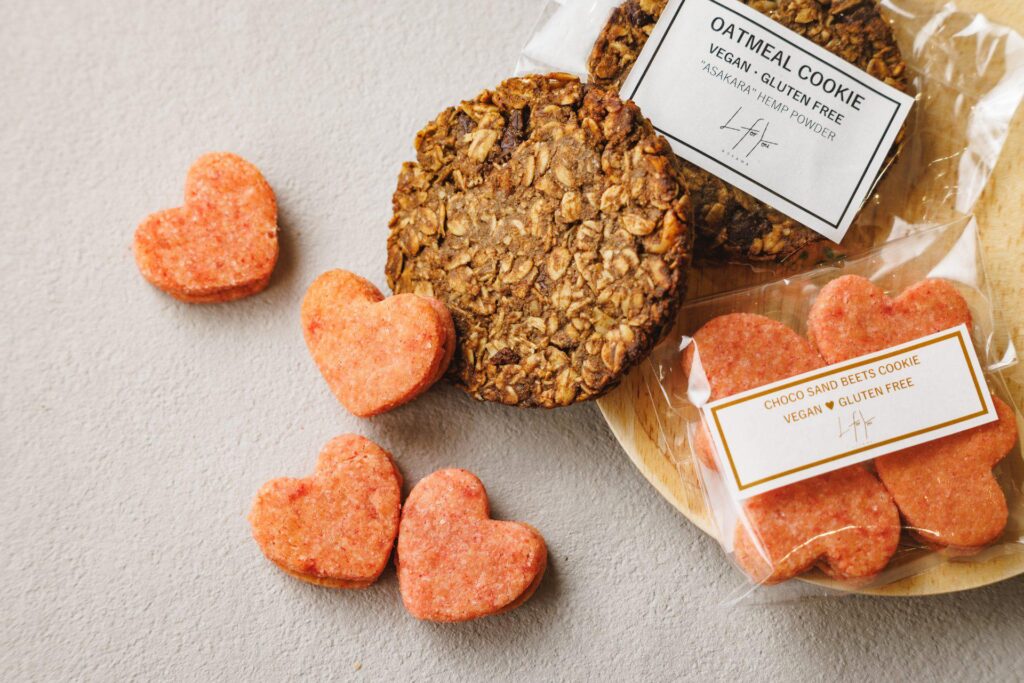
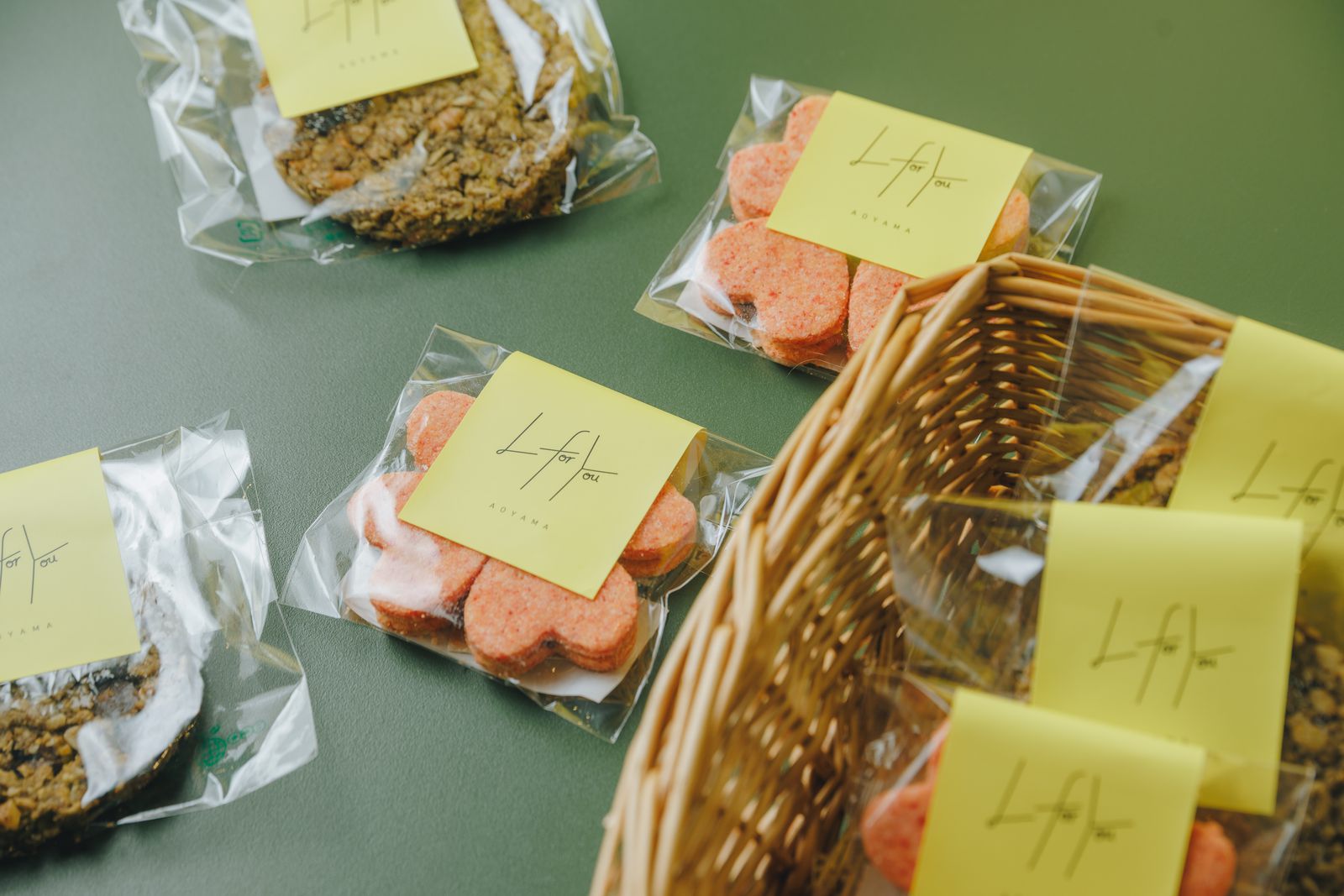
All L for You baked goods are vegan, and made without wheat flour or white sugar (refined cane sugar). The ingredient list and allergens for each product are on its product page in our online store (opens in a new tab). Ships within Japan only. You can also buy them at our shop in Minami-Aoyama.
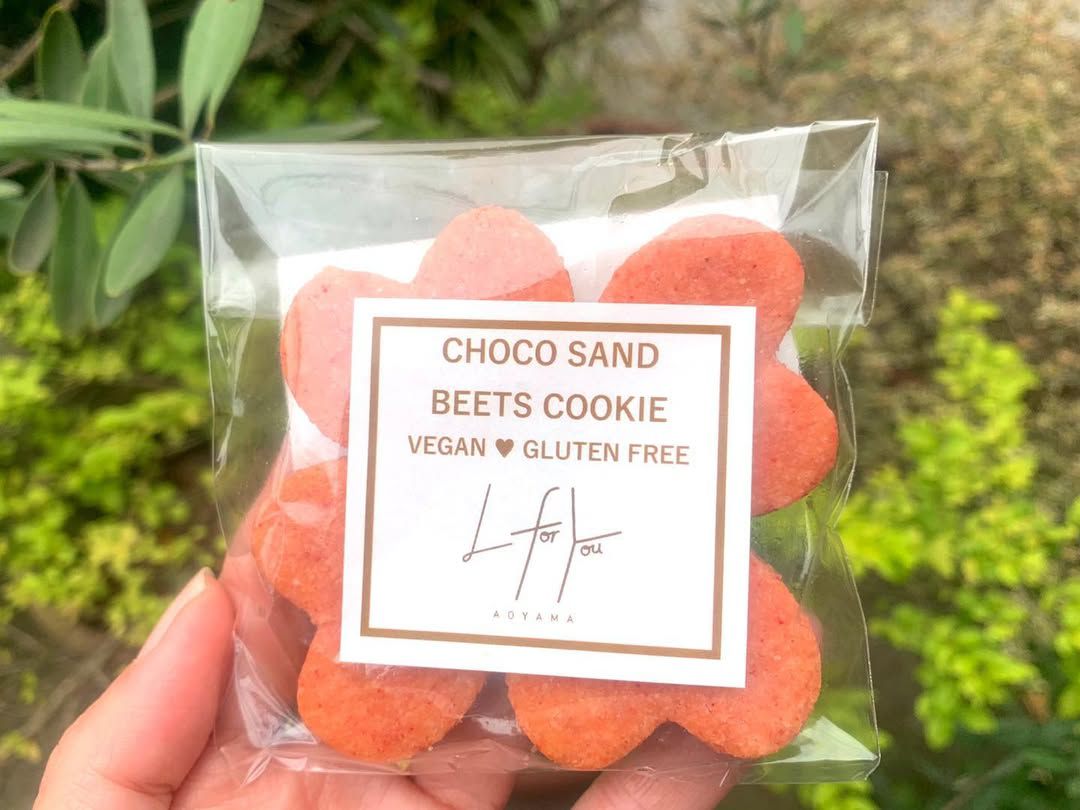
We don’t use wheat flour, and no wheat is handled in our kitchen. However, we cannot rule out trace contamination that comes from the raw materials themselves — for example, when an ingredient is grown or processed near wheat. Some items contain nuts such as walnuts and almonds.
Frequently Asked Questions
Visit Us
Cookies, donuts and pound cakes are always available at our shop in Minami-Aoyama. If you have questions about ingredients or allergens, please ask our staff before you buy.
| L for You AOYAMA | |
|---|---|
| Address | 1F Ikegami Bldg, 3-9-3 Minami-Aoyama, Minato-ku, Tokyo |
| Access | 6-minute walk from Omotesando Station, Exit A4 |
| Hours | Mon–Thu 11:00–20:00 / Fri 11:00–21:00 / Sat 9:30–21:00 / Sun 9:30–18:00 |
| Phone | +81-3-6459-2504 |
See how to find us, or browse the menu if you’d like to stay for a meal.